ACADEMIC YEAR 2026-2027
|
S.NO
|
DESCRIPTION OF THE ACTIVITY
|
PHOTO
|
|
1
|
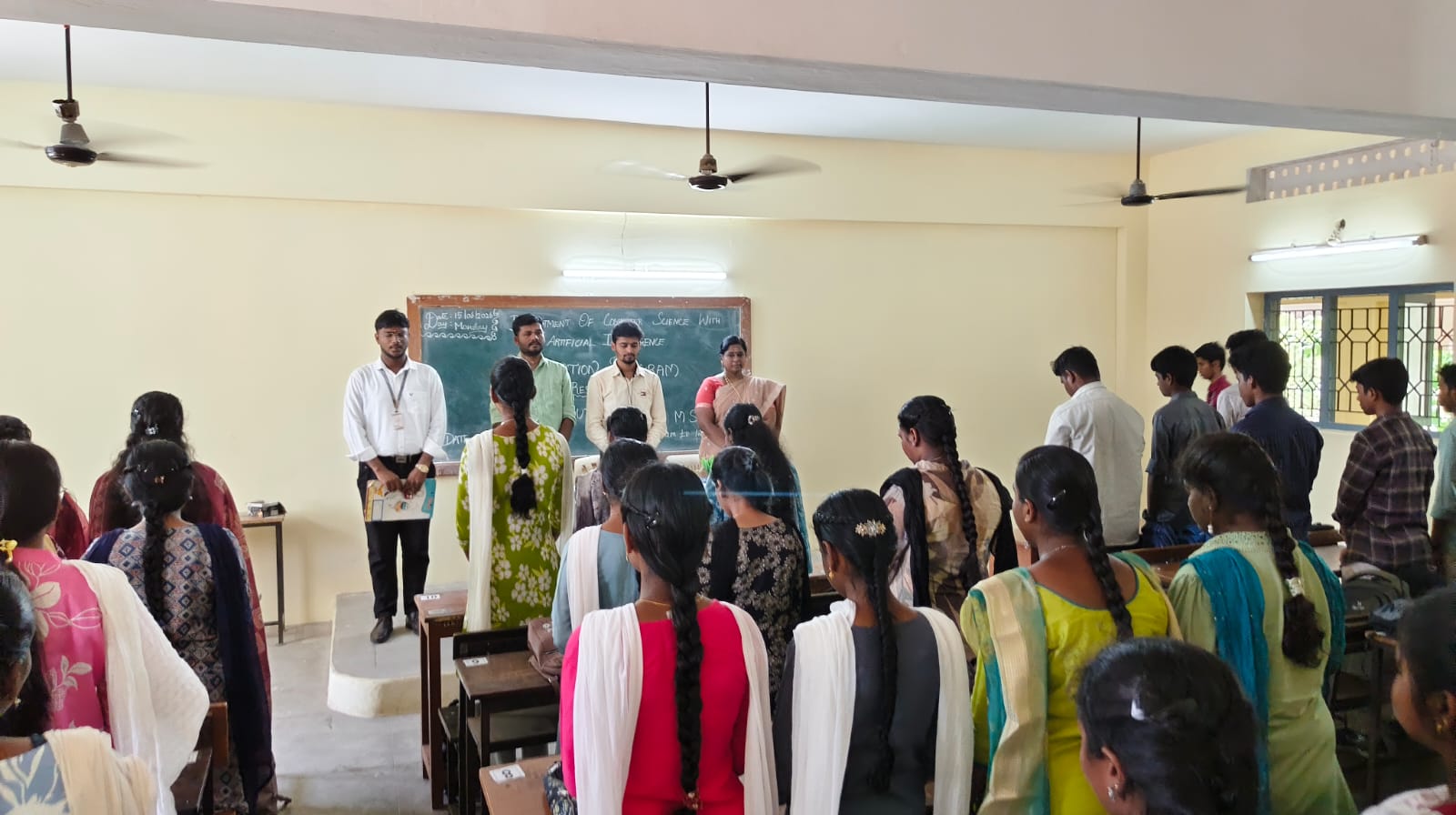
Orientation Programme
The programme was conducted to familiarize students with the emerging field of Artificial
Intelligence and to provide a clear understanding of the opportunities and challenges that lie
ahead in their academic journey. The session was delivered by Mr. Muthukumaran MS,
Engineering Associate Manager, who shared valuable insights on the transformative
impact of AI across various industries and the growing demand for AI professionals in the
global job market.
Date: 15-06-2026
|

|
|
2
|
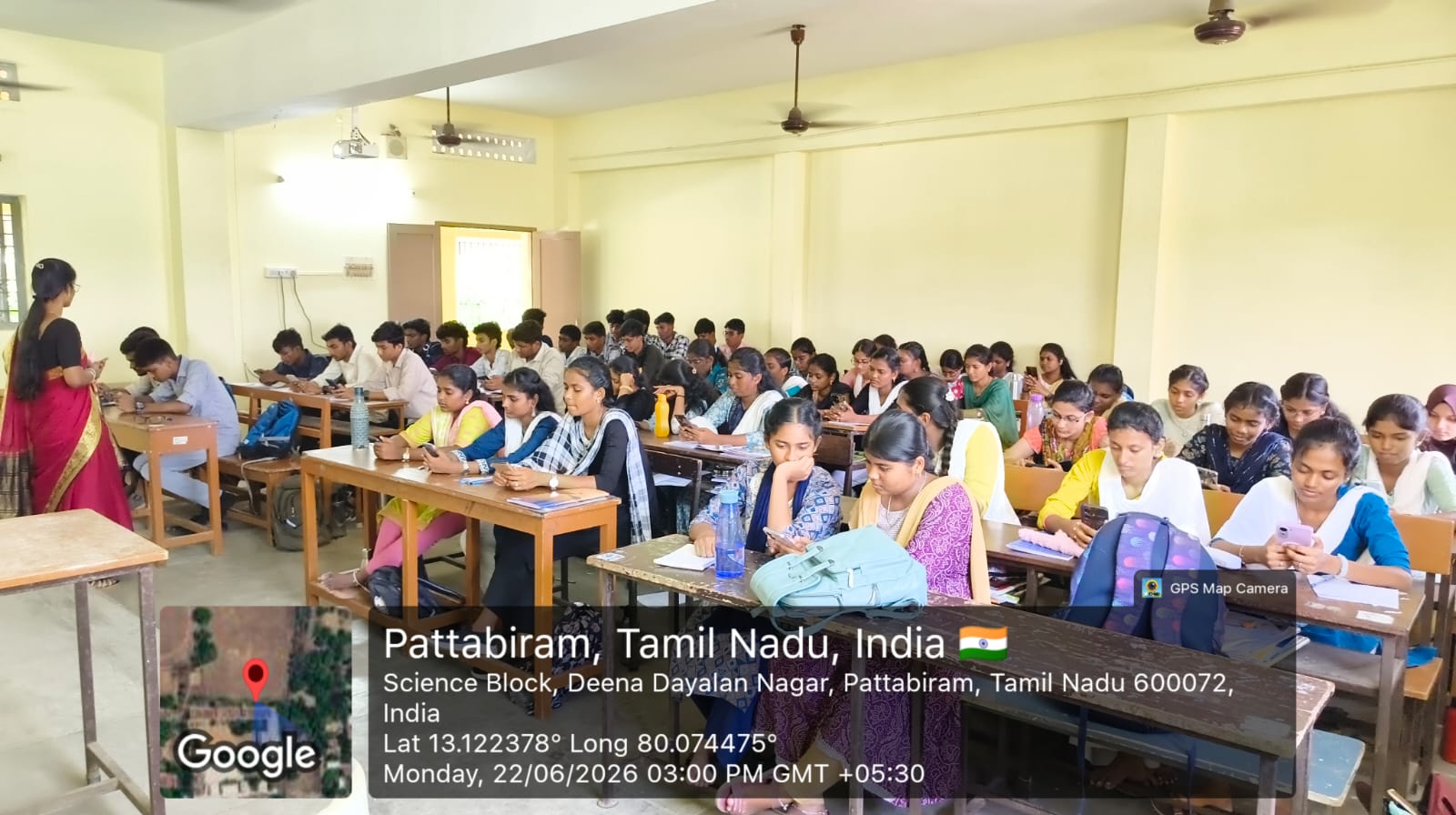
Bridge Course for I year
The aim of this course is to provide foundational knowledge of computer systems, including
hardware, software, storage, and networking.
Date: 15-06-26 - 19-06-26
|
|
|
3
|
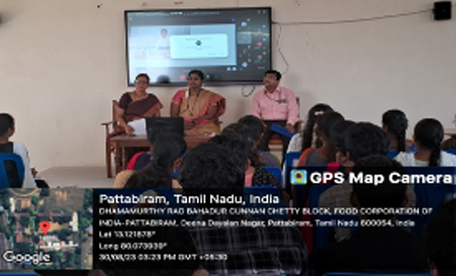
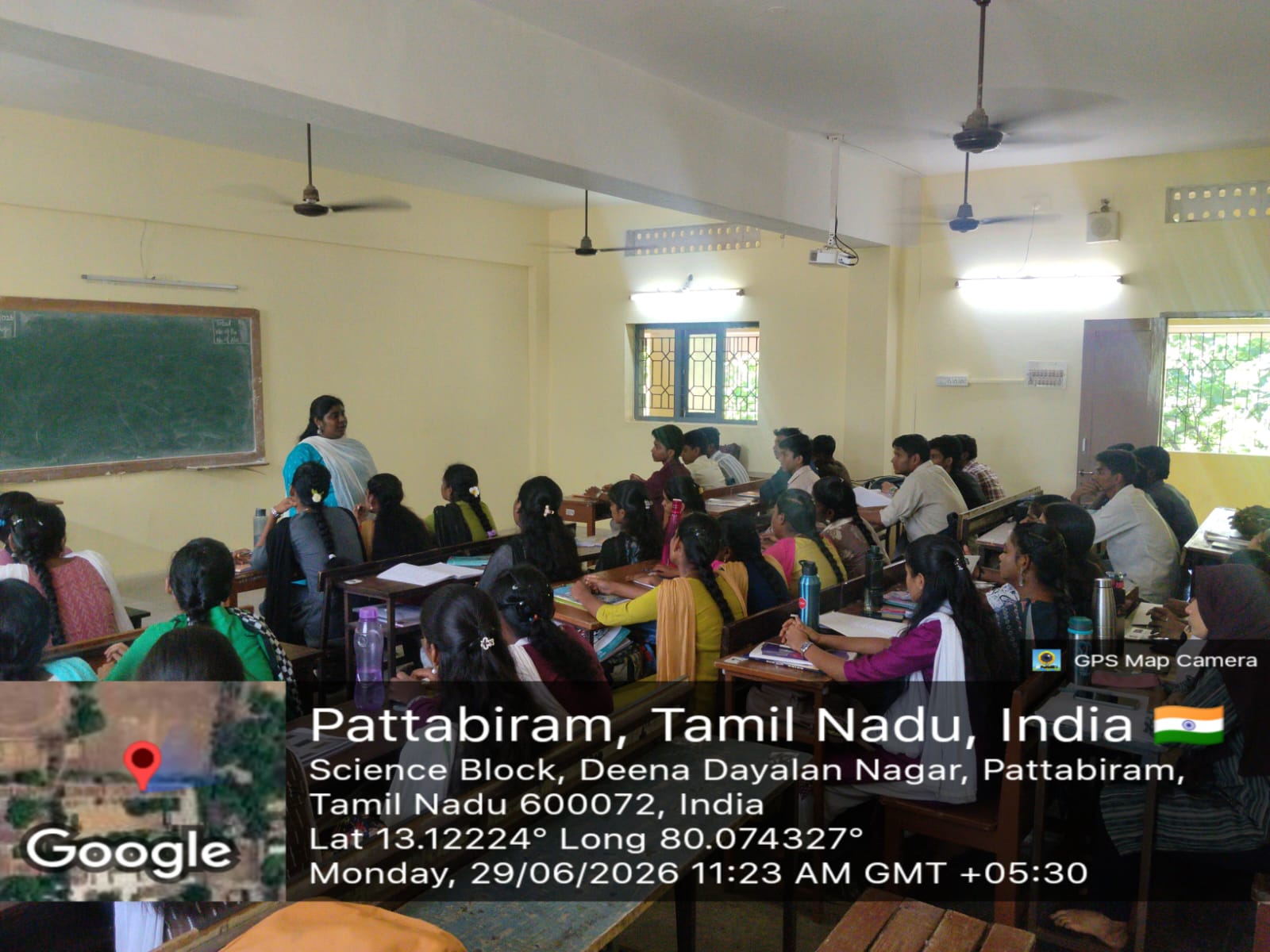
Foundations for Understanding Artificial Intelligence
The resource person explained how AI systems collect data, identify patterns, make predictions,
and support decision-making processes in various domains. Students were introduced to the
practical applications of AI in healthcare, education, banking, transportation, business, and
automation.
Date: 29-06-2026
|
|
|
4
|
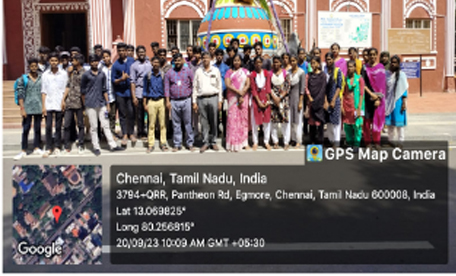
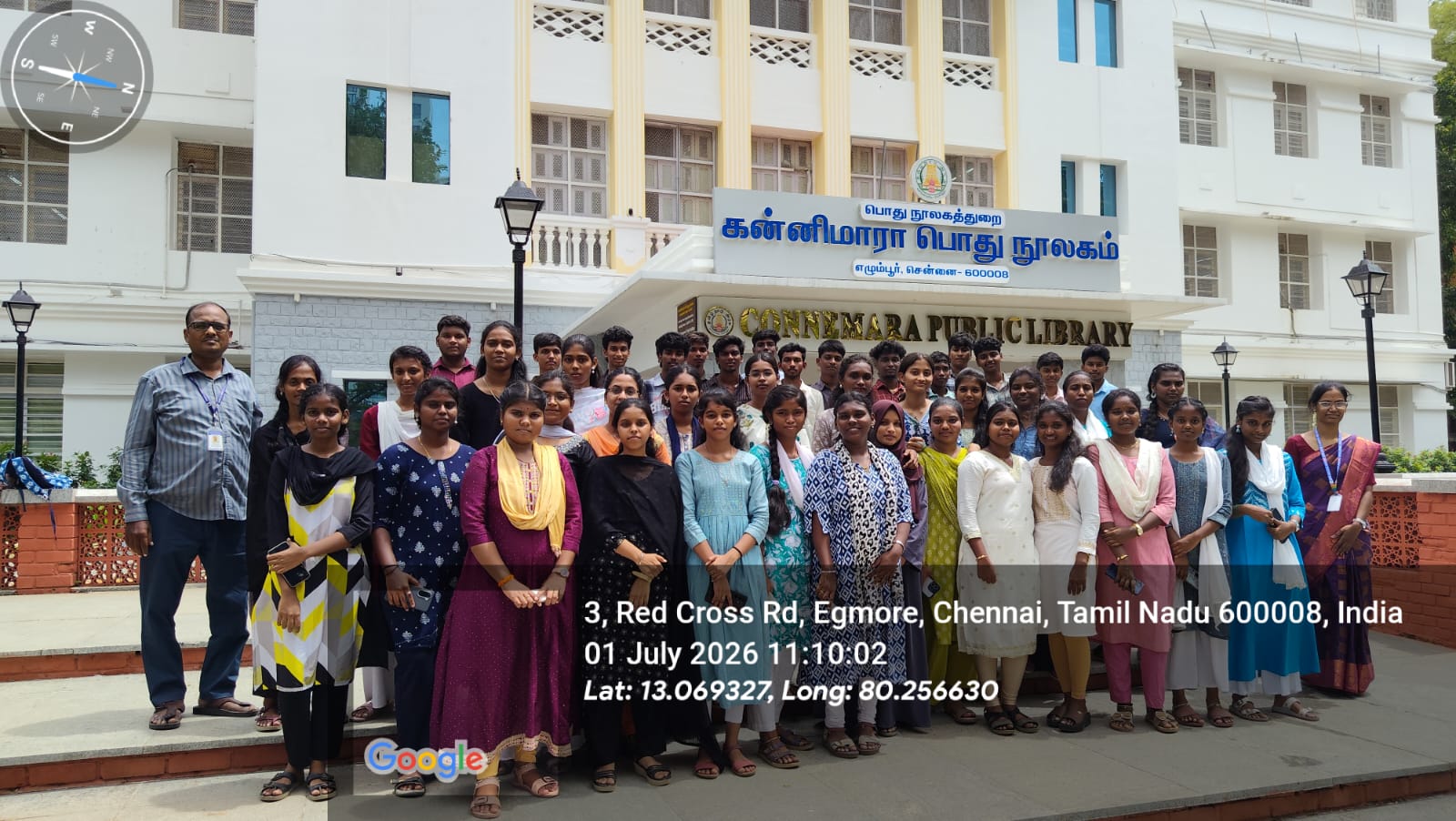
Educational Visit to Government Museum, Egmore & Connemara Public Library,
Chennai
The visit was arranged to provide students with exposure to India's rich cultural heritage,
historical resources, and knowledge repositories. The programme aimed to enhance students'
understanding of history, culture, and the importance of preserving knowledge for future
generations.
Date: 01-07-2026
|

|
|
5
|
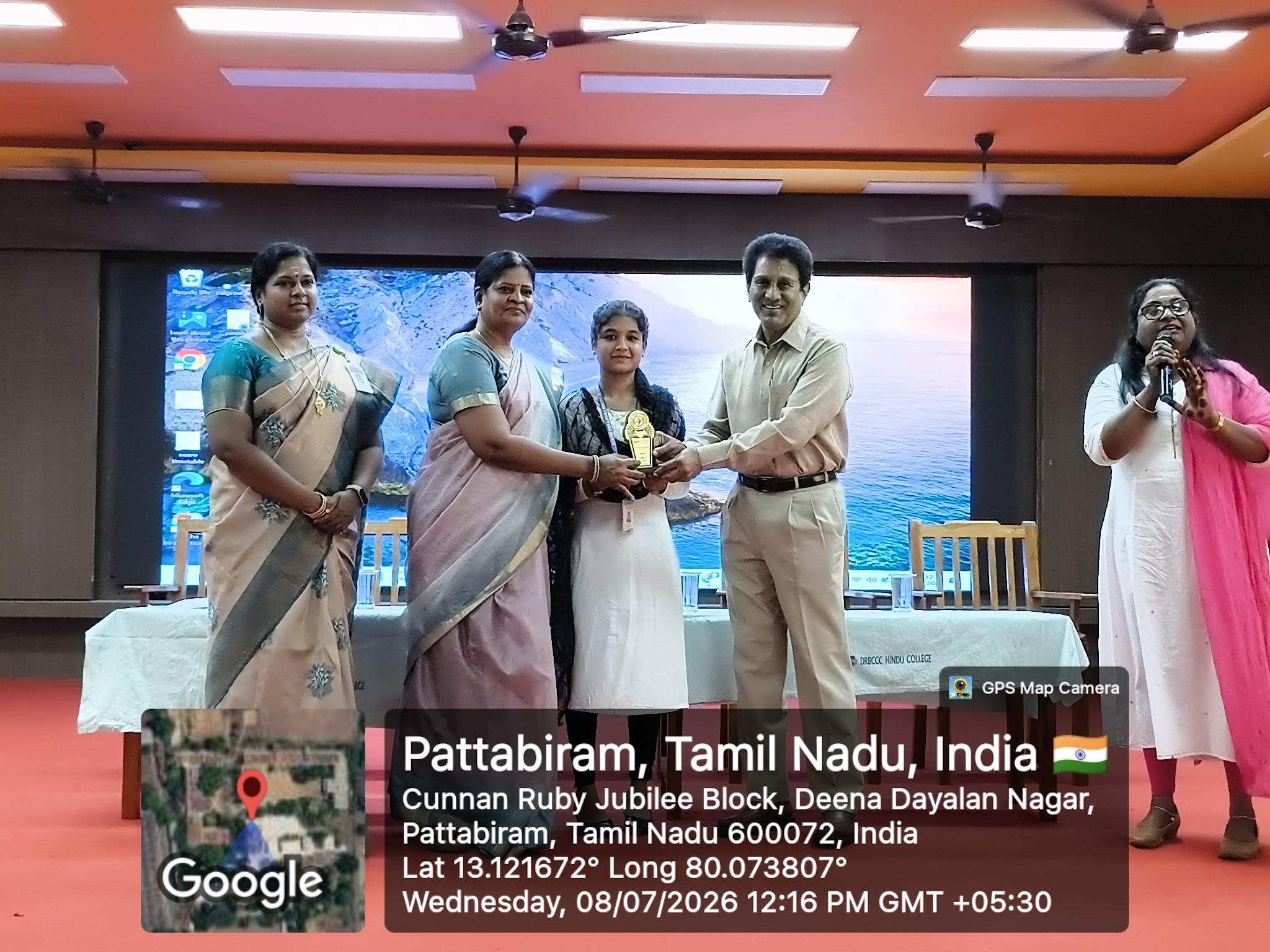
Future Ready: Building Your Path in Technology
The resource person Ms. Sujatha Sampath, Founder of VELGROW Academy explained
the importance of adapting to rapidly evolving technologies and highlighted the growing demand
for skilled professionals in various domains such as Artificial Intelligence, Data Science,
Cyber Security, Cloud Computing, and Software Development. She emphasized the need to develop
technical knowledge, communication skills, problem-solving abilities, leadership qualities, and
teamwork for career success.
Date: 08-07-2026
|

|
|
6
|
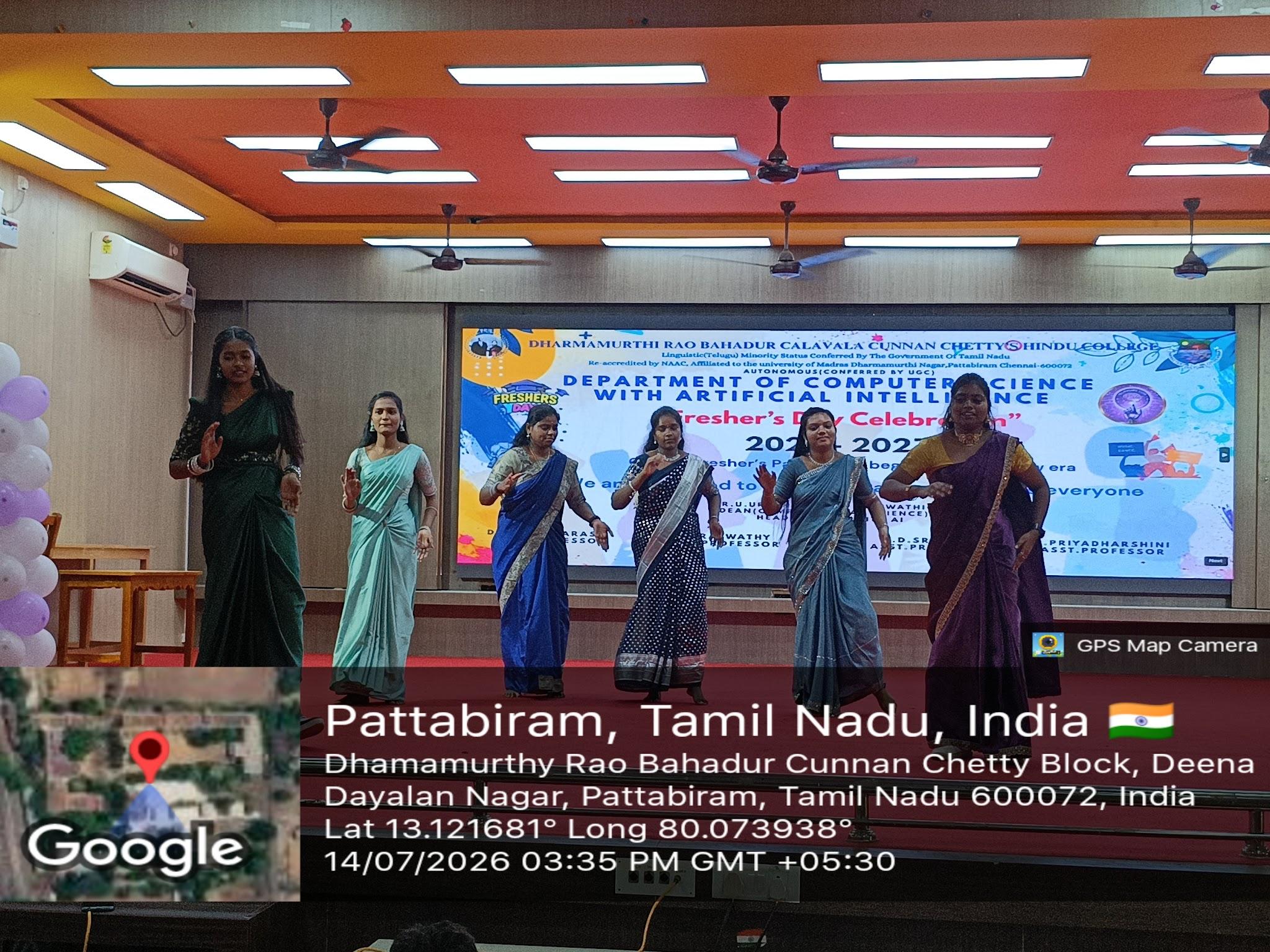
Freshers Day Celebration
The Department of Computer Science with Artificial Intelligence warmly celebrated Freshers' Day
to welcome the first-year students into the department. The event aimed to create a friendly
and inclusive atmosphere, helping the newcomers interact with their seniors and faculty
members. The celebration featured a variety of cultural performances, fun-filled games, talent
showcases, and interactive activities that encouraged participation and teamwork.
Date: 14-07-2026
|

|
|
7
|
Industry Ready: From Classroom to Career – Bridging the Gap Between Academia and
Real-World IT Practices
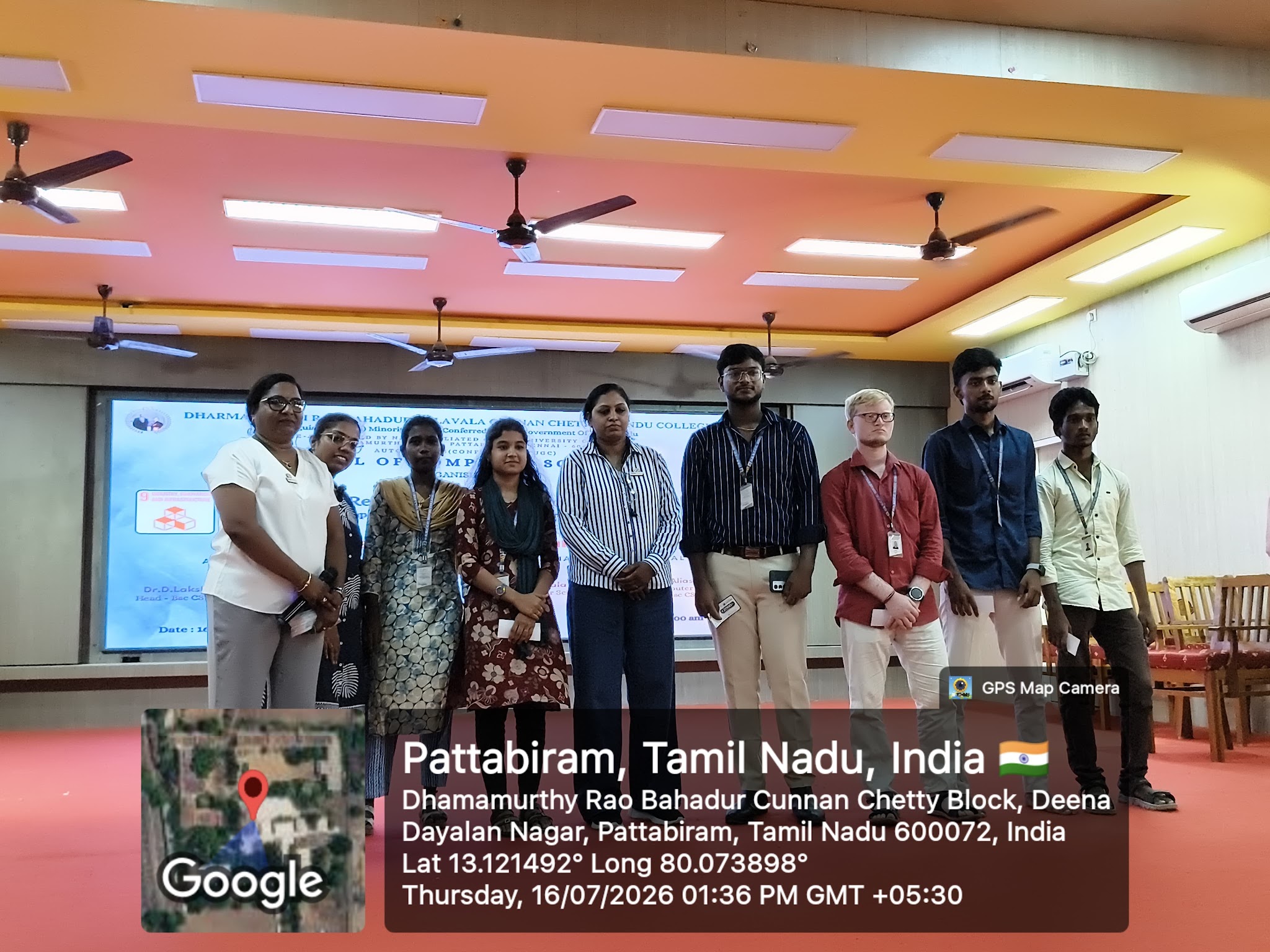
Ms. Lavanya Karthik, Associate Application Engineer at Oracle India Pvt. Ltd.,
Bangalore, served as the Resource Person. She shared her professional experiences
and provided valuable guidance on industry trends, workplace expectations, technical
competencies, career planning, and employability skills required in the modern IT
environment.
Date: 16-07-2026
|

|
|
8
|
30-hour certificate course on "Artificial Intelligence Fundamentals and Career
Readiness Training"
Students were introduced to the fundamentals of Artificial Intelligence, AI tools and
applications, and their real-world usage across industries. The sessions emphasized
experiential learning through demonstrations, practical exercises, and project-based
activities. The trainer highlighted the growing importance of artificial intelligence and
digital technologies in today's job market. Students were encouraged to pursue continuous
learning, professional certifications, internships, and industry projects to strengthen their
career prospects.
Date: 20-07-2026 to 24-07-2026
|

|
ACADEMIC YEAR 2025-2026
|
S.NO
|
DESCRIPTION OF THE ACTIVITY
|
PHOTO
|
|
1
|
Bridge Course for I year
The aim of this course is to provide foundational knowledge
of computer systems, including hardware, software, storage, and networking.
Date : 9/6/25 - 13/6/25
|

|
|
2
|
Entrepreneurship in AI: Building
a Successful
AI-Driven Business
The aim of this seminar is to bridge academic knowledge with
practical expertise by allowing students to interact with a leading industry professional. It is
also intended to inspire students to pursue innovation and understand the startup ecosystem in
AI.
Date: 30/6/25
|

|
|
3
|
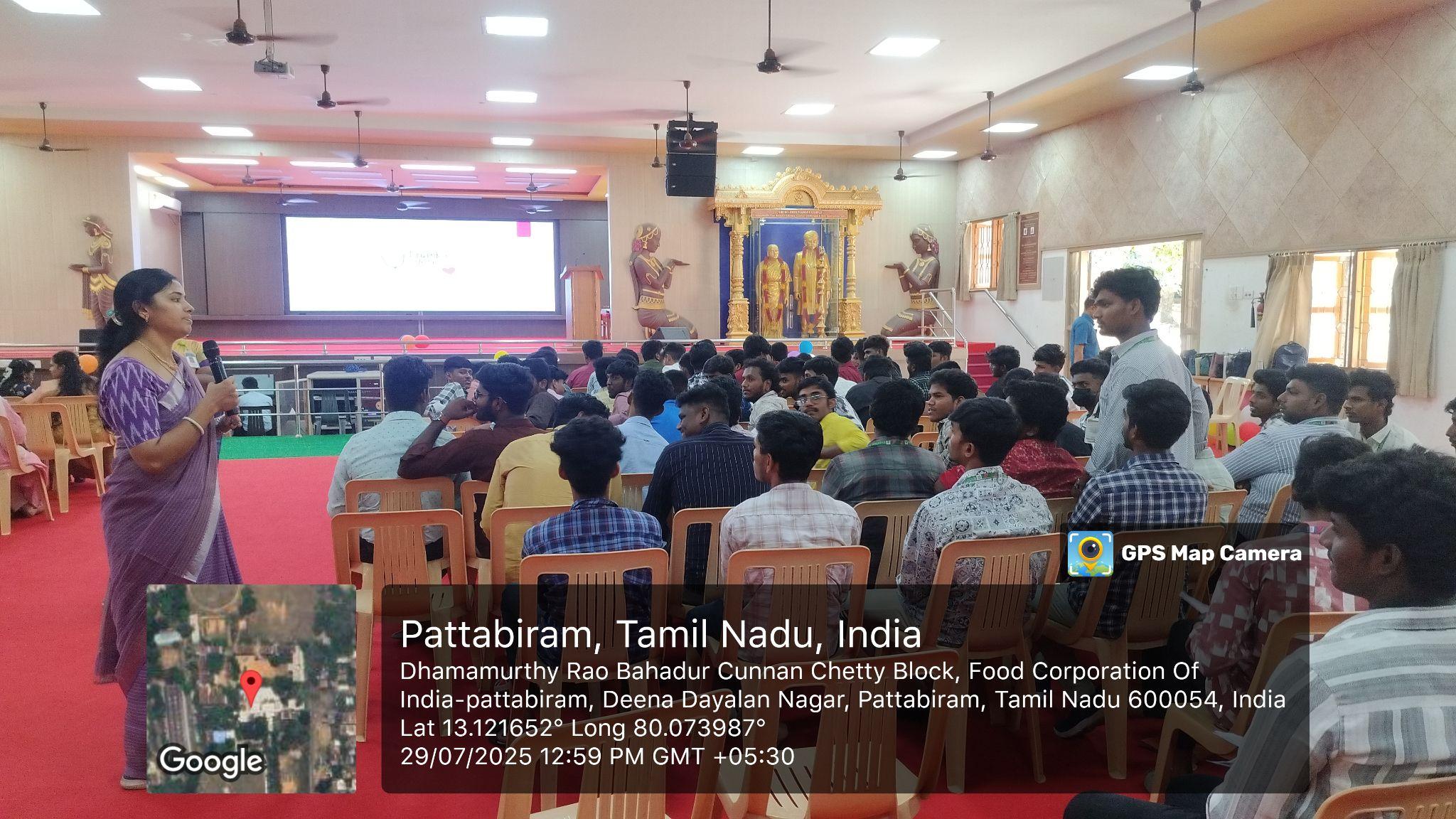
Digital health & Personal Hygiene : A Modern Approach
The primary objective of the seminar was to educate
participants on the relevance of personal hygiene and digital health tools, while exploring the
integration of traditional healthcare practices with modern digital technologies for better
well-being.
Date: 29/7/25
|
|
|
4
|
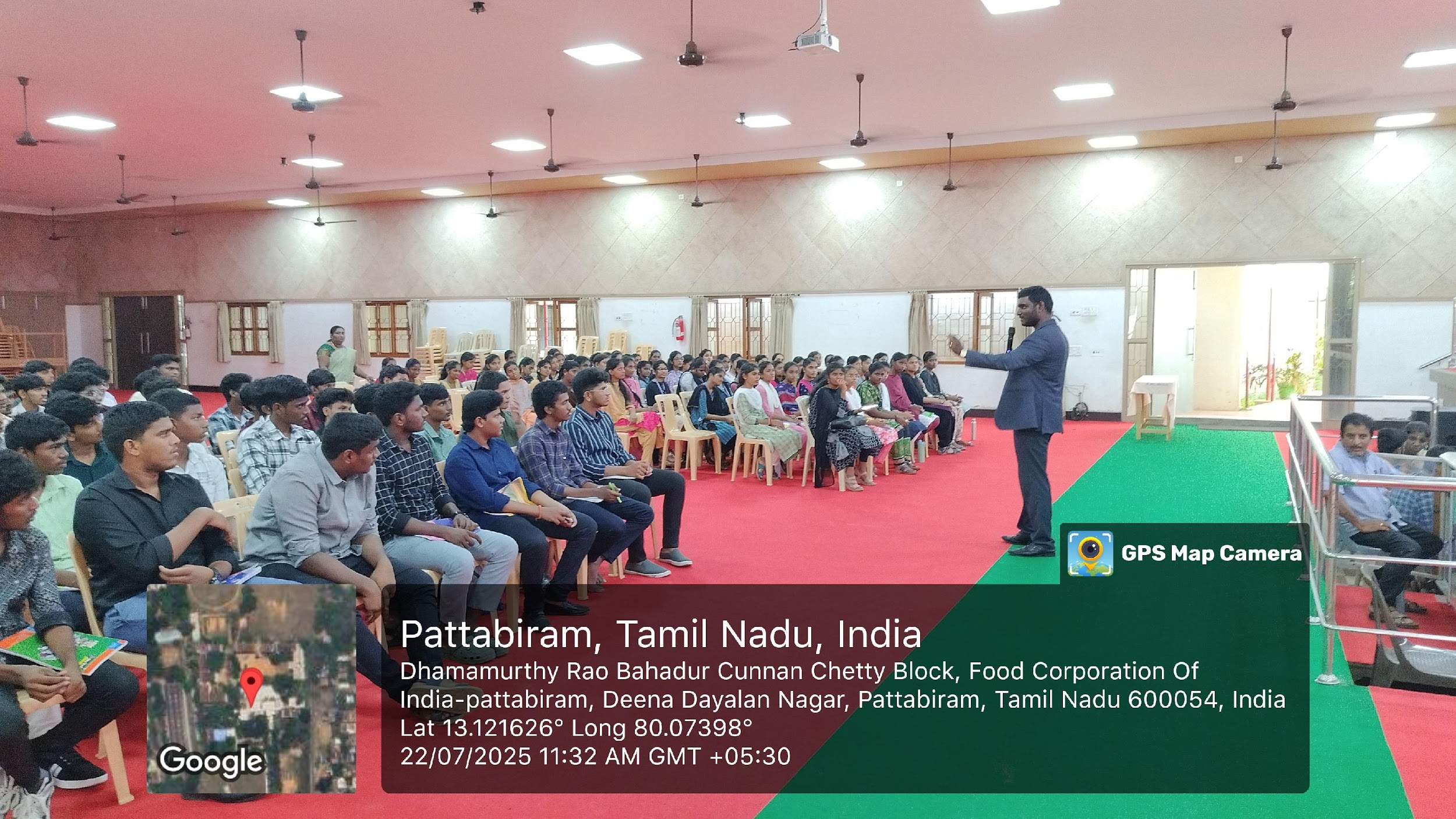
Revolutionizing Digital Marketing with AI
The primary objective of the seminar was to expose students to the dynamic intersection of
artificial intelligence and digital marketing was held on 23rd July 2025,
highlighting AI’s role in data-driven decision-making, personalization, and predictive
analytics. Participants: 135 (130 students, 5 faculty).
|
|
|
5
|
The Mindful AI: Heartfulness Meditation for Future Technologists
The objective of yoga is To foster focus, emotional balance, life skills, and holistic well-being
in future technologists through Heartfulness meditation practices.(11–13 Aug
2025) with 30 weekly follow-ups, fostering life skills, focus,
emotional balance, and holistic student well-being.
|

|
|
6
|
Emotional Intelligence & Interpersonal Skills
The Department of Computer Science with AI and IQAC organized a two-day workshop
on Emotional Intelligence & Interpersonal Skills on 8th and 11th July
2025, led by resource person Mr. P. Baskaran, aiming to enhance emotional
intelligence, empathy, and interpersonal skills for 155 participants.
|

|
|
7
|
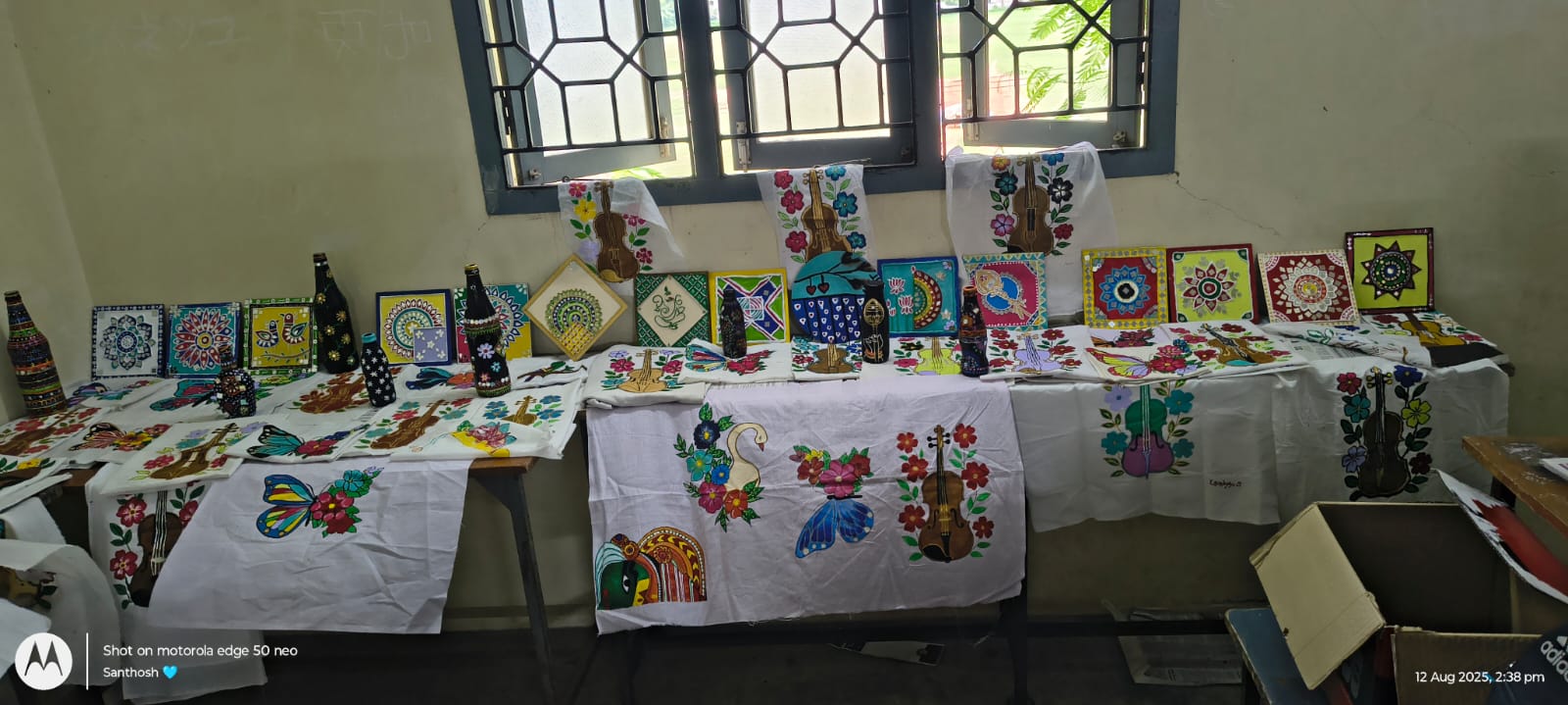
AI Fusion: Exploring mind thoughts art
The Department organized a three-day (4,11 & 12/8/25) certificate course titled “AI
Fusion: Exploring Mind Thoughts Art” to encourage students to integrate creativity with
technology, fostering innovative thinking through artistic expression.
The main objective was to blend the artistic dimension of
students with emerging AI concepts, helping them explore creativity, imagination, and design
thinking as a foundation for innovation.
|

|
|
8
|
Digital Marketing Course - I year
The Department of AI organized a 30-hour Certificate Course on “Digital Marketiung” for I Year
students from 18–22 August 2025, facilitated by Mr. B.Janarthanan, Trainer, Plant Green Inertia
Private Ltd.. This program is designed to introduce students to key concepts and tools in the
field of digital marketing, such as social media management, SEO, content marketing, email
campaigns, and analytics.
|

|

|
|
9
|
Data analytics and AI Tools Course - II year
The Department of AI organized a 30-hour Certificate Course titled “Data Analytics and AI
Tools” by Mr. M.Sundhararajan, Trainer , for the second-year
students The program is proposed to be held from 18th August to 26 August 2025, in association
with a professional training partner RPS Academy, Ambattur, Chennai-53.
|


|
|
10
|
Devops Certification Course - III year
The Department of AI organized a 30-hour Certificate Course on
“DevOps” from 18–22 August 2025,
facilitated by Mr. Sanjay Anbarasu, TATTI. The program
aimed to provide intensive training in CI/CD pipelines, automation, and modern development
tools, enabling students to acquire practical expertise while connecting theoretical
knowledge with industry applications.
|


|
Pongal Celebration
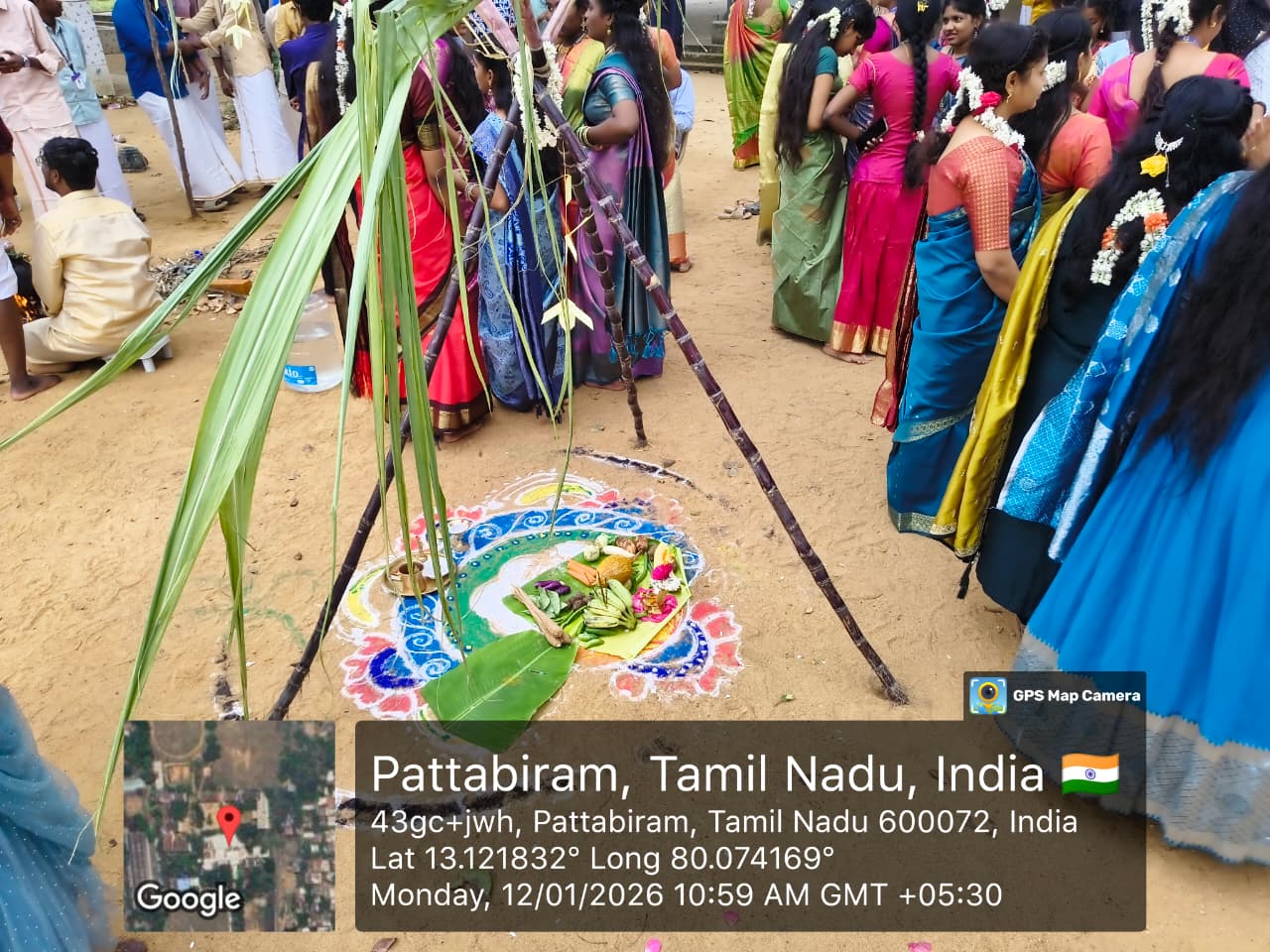
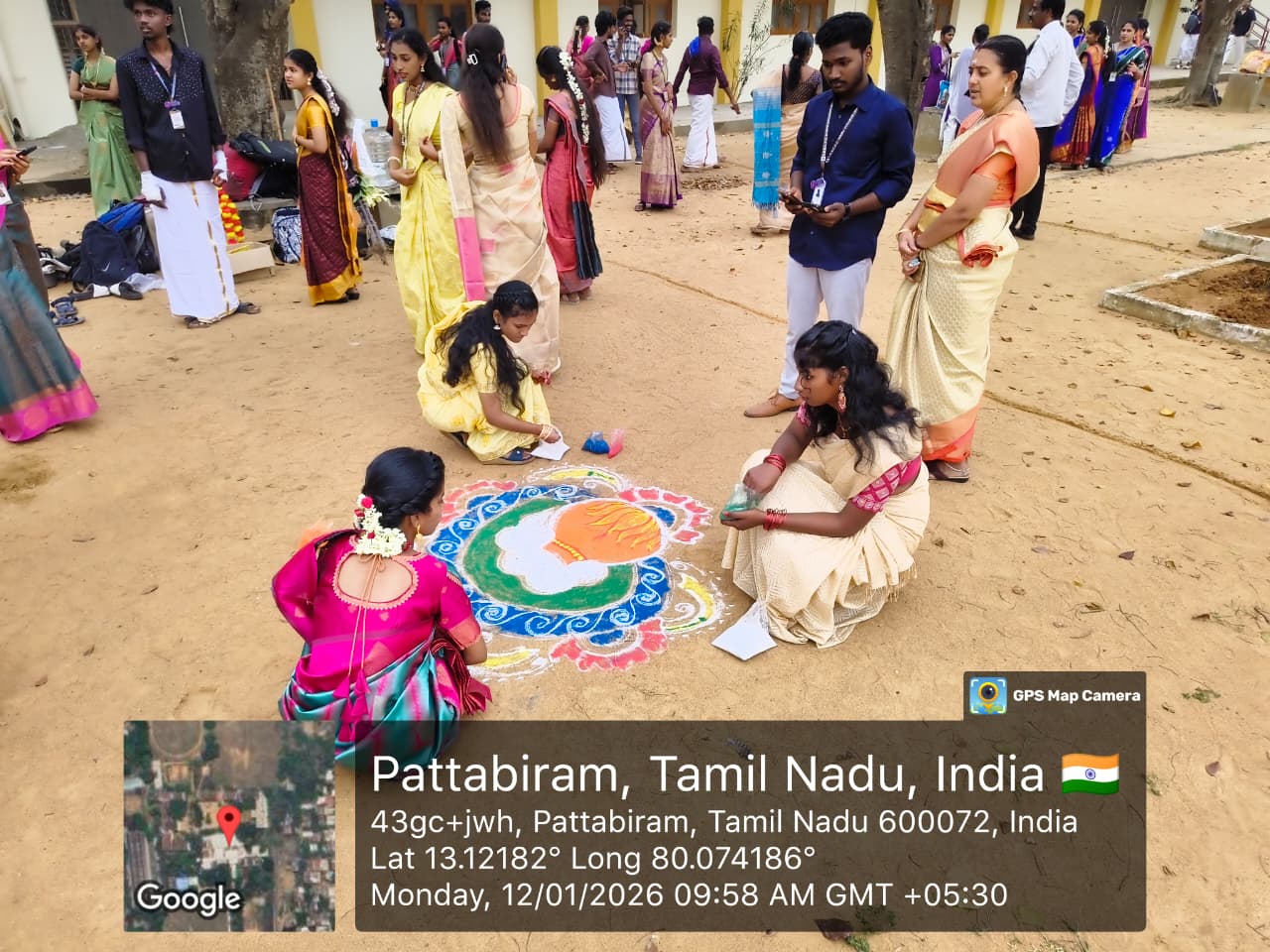
The Department of Computer Science with Artificial Intelligence celebrated Pongal with great enthusiasm and traditional spirit. The celebration was organized to promote Tamil culture, heritage, and unity among students and faculty members. The programme began with the traditional Pongal cooking ceremony, followed by cultural performances, folk dances, traditional games, and competitions. Students participated actively, dressed in traditional attire, showcasing the rich cultural values and festive spirit of Tamil Nadu.
|
11
|
Prompt Engineering certificate course
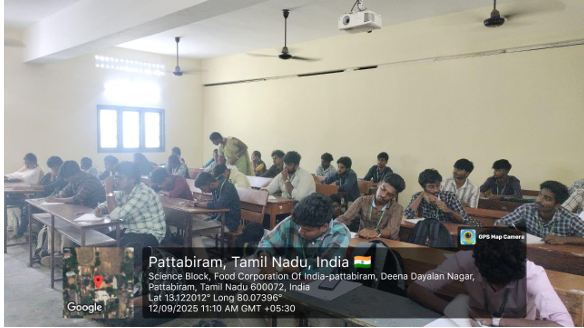
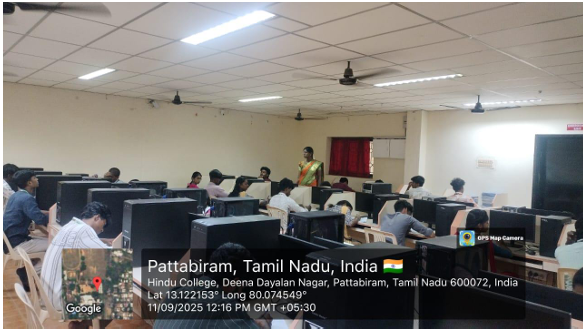
The offline Prompt Engineering certificate Course, held from 08/09/2025 to 15/09/2025 at Decennial Block, DB 11, trained 36 students through industry collaboration with Trusty Bytes, Chennai, led by AI Engineer Mr. Sudharsan D S.
|
|
|
12
|
Job Readiness Skills for Girls 23/02/2026
Certificate and Kit Distribution
Certificates were distributed to students who successfully completed the programme. Selected students received stipends based on their performance. All participants were provided with a Job Readiness Kit worth ₹5000, which included:
- A free Oracle bag
- Career guidance books
- Notebooks
- Writing materials (pen, pencil, etc.)
- Study and placement support materials
Additionally, a ₹1000 career support voucher was announced to further assist students in their professional development.
|


|
|
13
|
“AI Visionaries:Empowering Girls” on 24th and 25th February 2026 from 11:00 a.m. to 2:00 p.m. at the CalavalaRamanujamChetty Conference Hall.
The Chief Guests were Benjamin Charles, Project Manager, Team Everest, and Sasidharan M.A., Senior Associate, Team Everest.
|


|
|
15
|
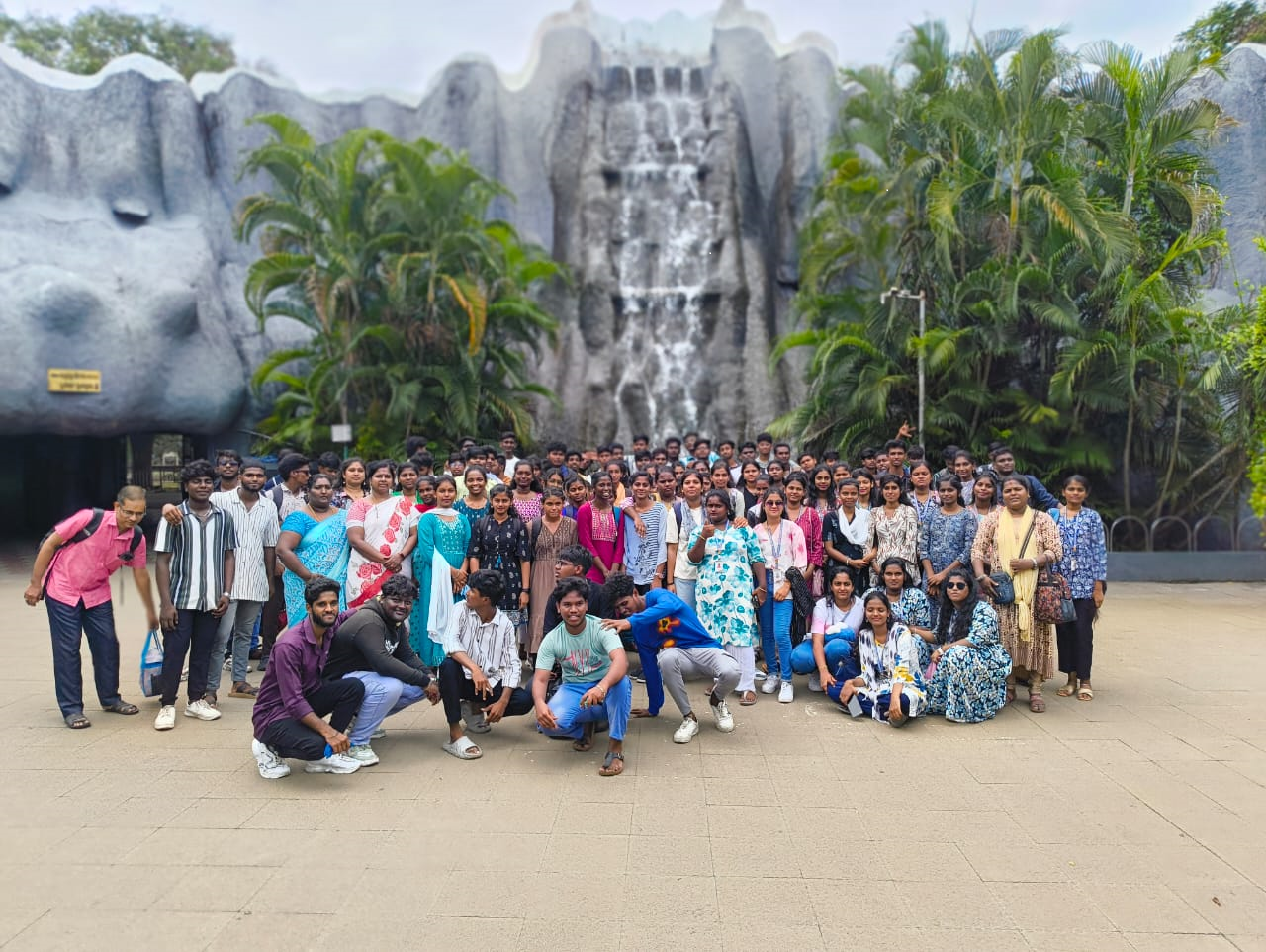
The Vandalur Zoo One-Day Educational Trip, organized for students as part of experiential learning initiatives, offers a unique opportunity to explore wildlife, biodiversity, and environmental conservation firsthand. Located in Chennai, the renowned Arignar Anna Zoological is one of the largest zoological parks in India. The trip provides students with an engaging and informative outdoor learning experience beyond the classroom.
Enhance students' understanding of animal life, habitats, and ecological balance. Create awareness about wildlife conservation and the importance of protecting endangered species. Encourage observation, critical thinking, and inquiry-based learning through real-world experiences. Foster environmental responsibility and appreciation for nature. Promote social interaction, teamwork, and holistic development among students.
Date : 18/07/25
|
|
|
16
|
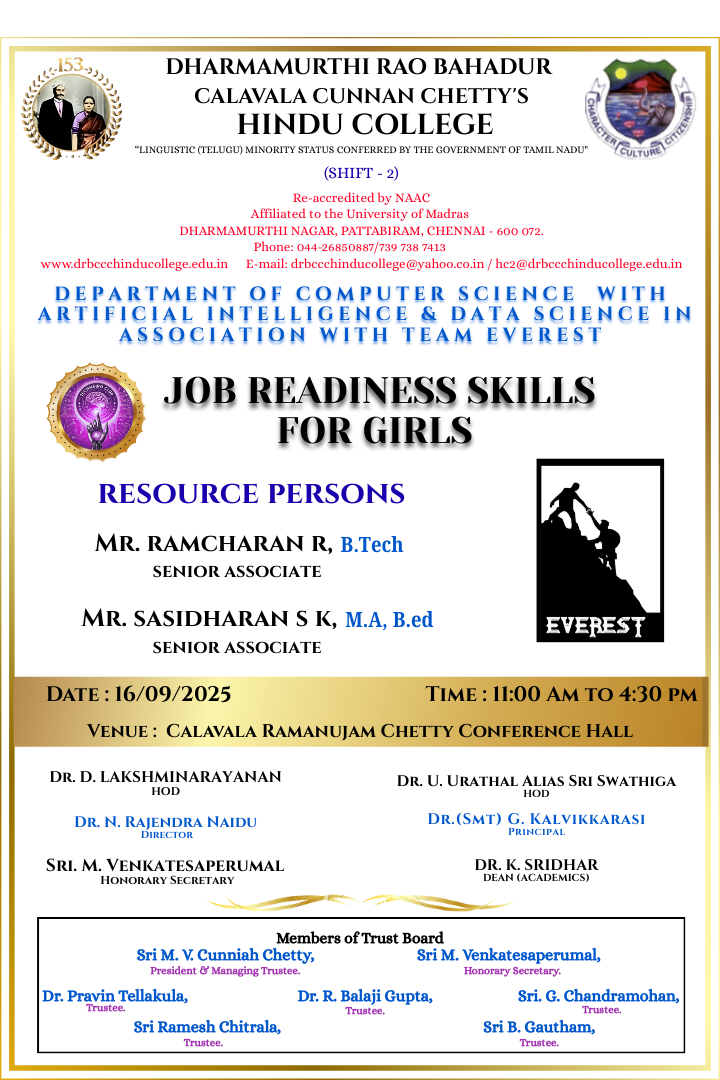
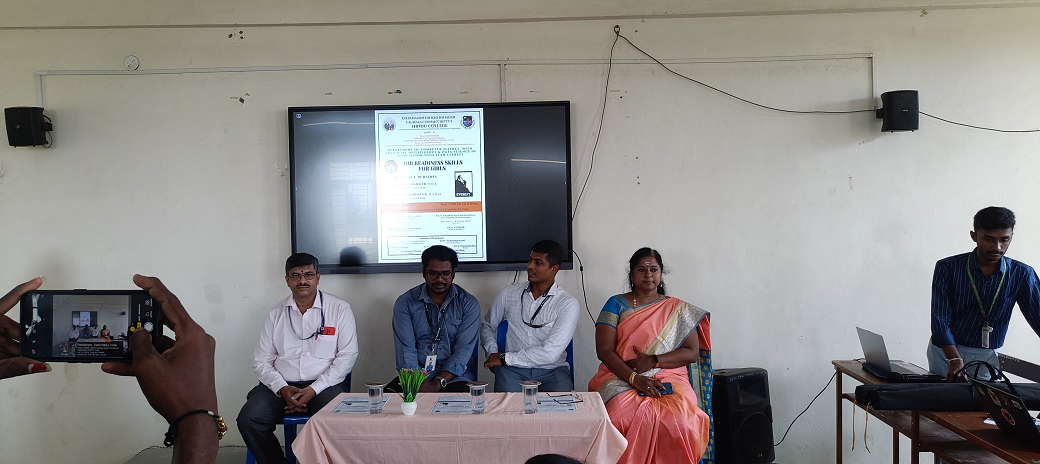
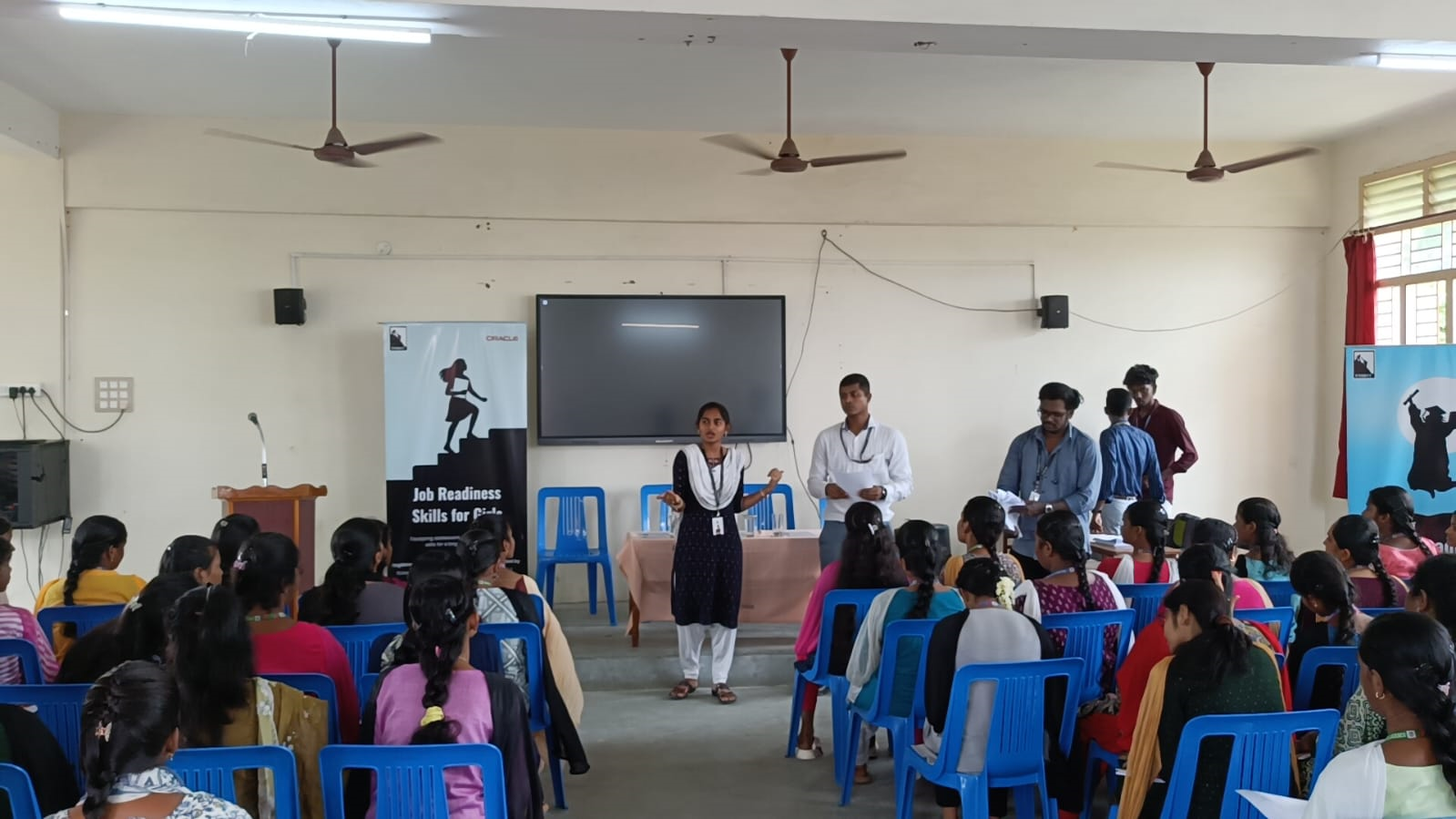
"Job Readiness Skills for Girls" on 16th Sep 2025 under NAAC Criterion 5.1.4 & 5.1.2, which focuses on equipping female students of 2nd & 3rd year computer science with Data development.
The aim of this program is to empower girl students with the necessary tools and knowledge to face career opportunities effectively and successfully transition from academics to professional life. This initiative will not only enhance their career preparedness but also contribute to women empowerment through skill-based learning.
|
|
|
17
|
The Department of Computer Science with Artificial Intelligence organized the inauguration of the Techneuro Club Association along with the distribution ceremony for Add-on Course Certificates. The event aimed to foster a culture of innovation and practical learning among students through co-curricular engagement and professional development opportunities.
The program commenced with a welcome address followed by the formal inauguration of the TechNeuro Club. Mr. Anthony Sebastine delivered an insightful keynote, sharing his experience in the tech industry and encouraging students to pursue continuous learning and skill development. The session also featured the distribution of certificates to students who completed various department-led add-on course
|
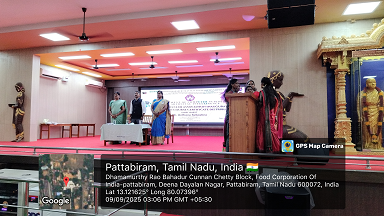
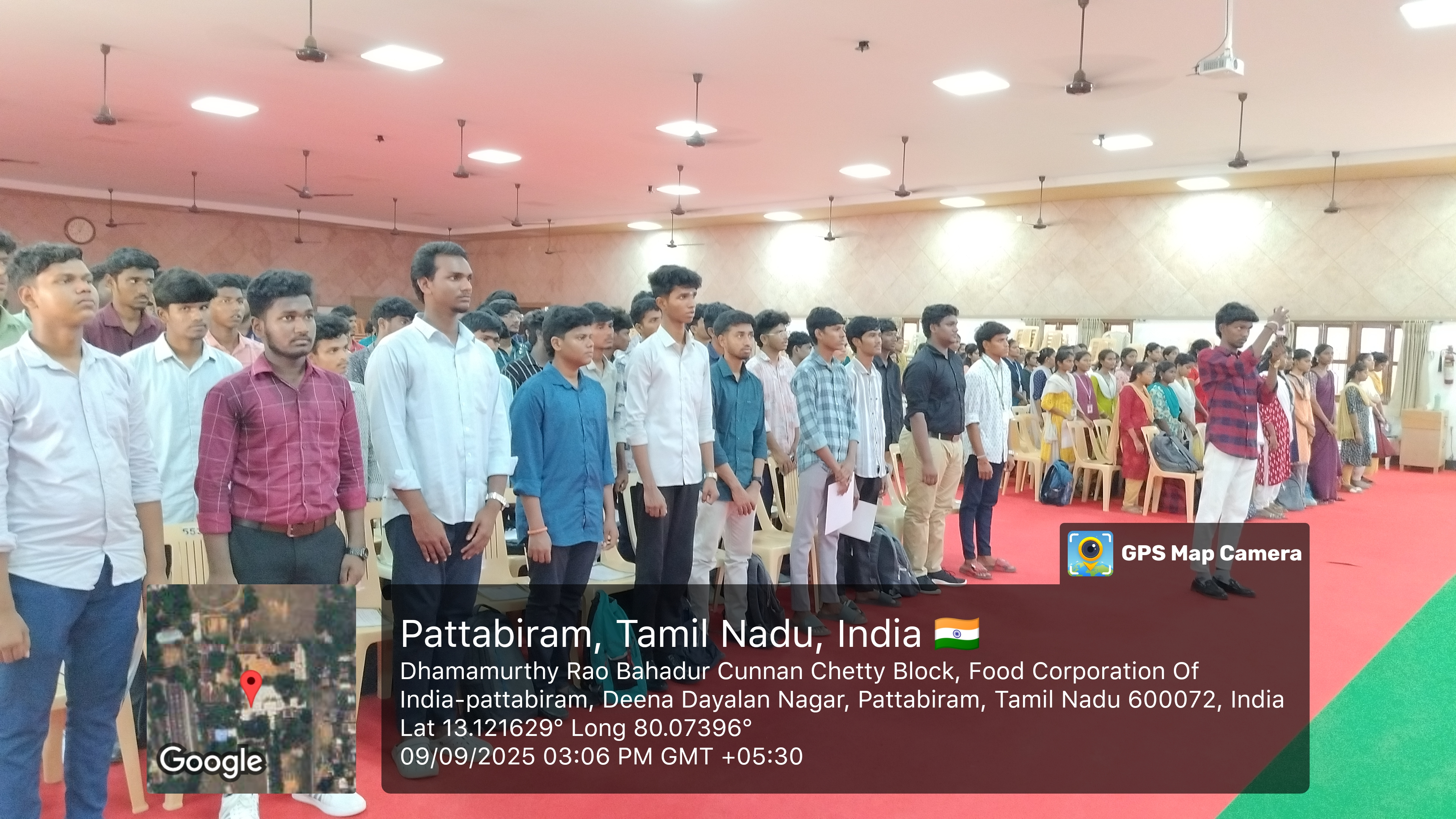
|
Department Activities: 2024-2025
The Pongal celebration, organized by the Department of Artificial Intelligence at DRBCCC Hindu College, was a
grand occasion that highlighted the essence of Tamil culture and tradition. The event aimed to foster cultural
awareness among students and staff while bringing the AI department together in festive spirit.
The celebration began at 10:00 am with a live demonstration of traditional Pongal cooking, where students and
staff participated enthusiastically. Dance, songs, and skits depicting the significance of Pongal in Tamil
culture. Students showcased traditional Tamil outfits, reflecting the spirit of Pongal.
The seminar titled “AI for Cyber Defense : Enhancing Security and Resilience” was organized by the
Department of Artificial Intelligence at DRBCCC Hindu College. The session aimed to provide insights
into cutting-edge advancements and technologies of AI in the field of Cyber Defense, shedding light on
the innovations, challenges, and potential applications in Cyber Defense.
The session began at 11:00 am with a welcome address by the Head of the Department of Artificial
Intelligence. Mr. Gunasekaran Loganathan took the stage at 11:15 am, delivering a comprehensive
presentation on AI in Cyber Defense and the role of immersive experiences of AI technologies and
applications in the world of Cyber Defense.
Key highlights from the session included:
1.An overview of AI in Cyber Defense, including Threat Detection and Prevention, Incident Response,
Deception Technology and Practical demonstrations of how AI in Cyber Defense is being utilized in the
Futuristic World.
2.A discussion on Cyber Defense and how it integrates AI with real world data.
The Department of Computer Science with Artificial Intelligence, in association with the Alumni
Association, successfully organized an Alumni Guest Lecture followed by a Panel Discussion on January
31, 2025
The event was aimed at enhancing students' knowledge of career opportunities, skill development, and the
latest trends in the field of Computer Science and Artificial Intelligence
Alumni Guest Lecture: "Current Blooming Opportunities"
The session was delivered by Mr. Mukesh Mani, who provided valuable insights into emerging trends in
networking, cybersecurity, and cloud computing. He discussed:
1 : The latest industry demands and job opportunities.
2 : The importance of certifications in networking (CCNA, AWS, etc.)
3 : The evolution of AI in networking and security.
Alumni Panel Discussion: "Career Guidance on Skills and Development"
The panel discussion, led by both resource persons, covered the importance of skill-building, interview
preparation, and career planning. Key takeaways included:
1 : Essential technical and soft skills required for IT and networking roles.
2 : Internships, projects, and certifications that boost employability
3 : Job market trends and emerging opportunities in AI and networking.
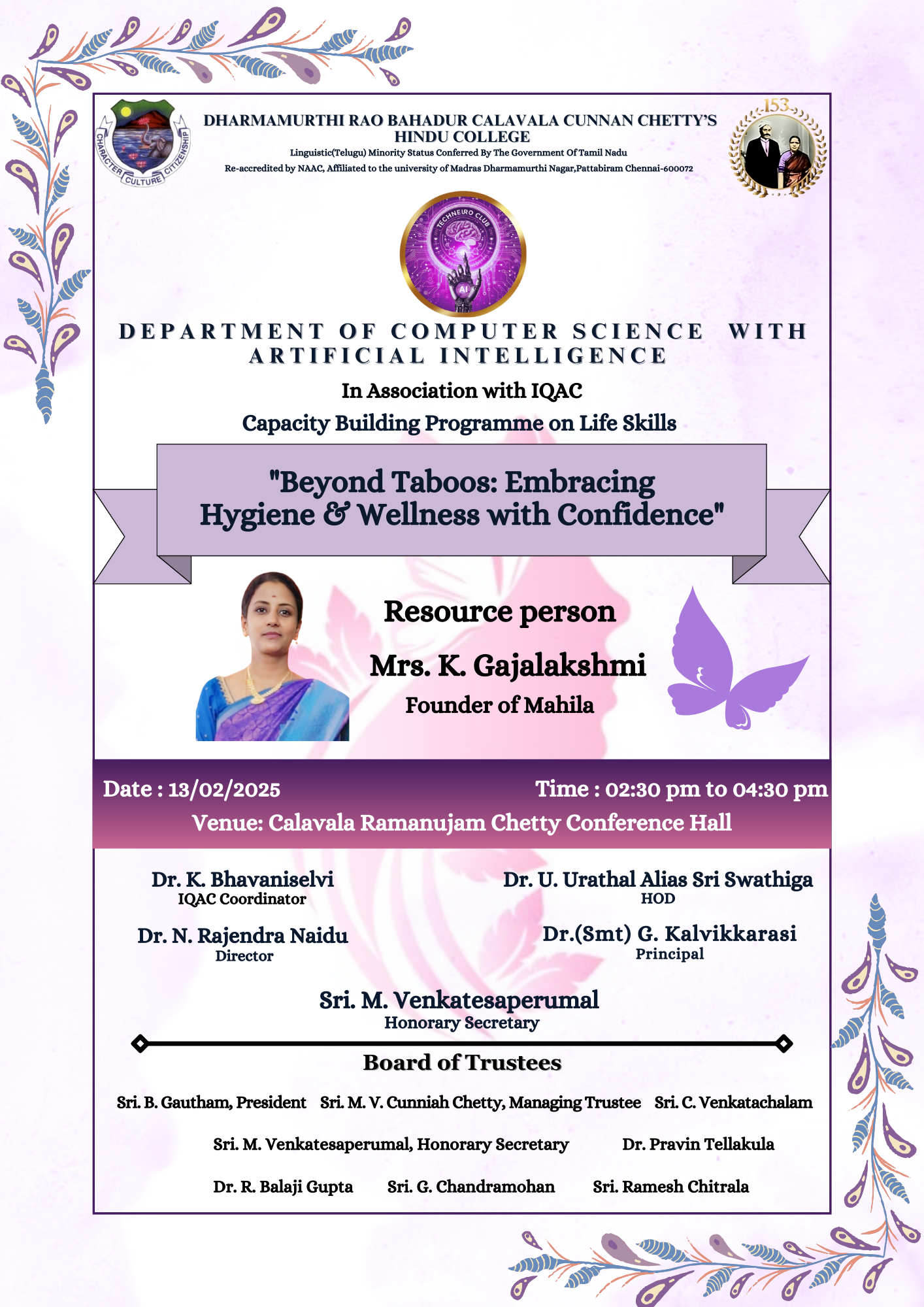
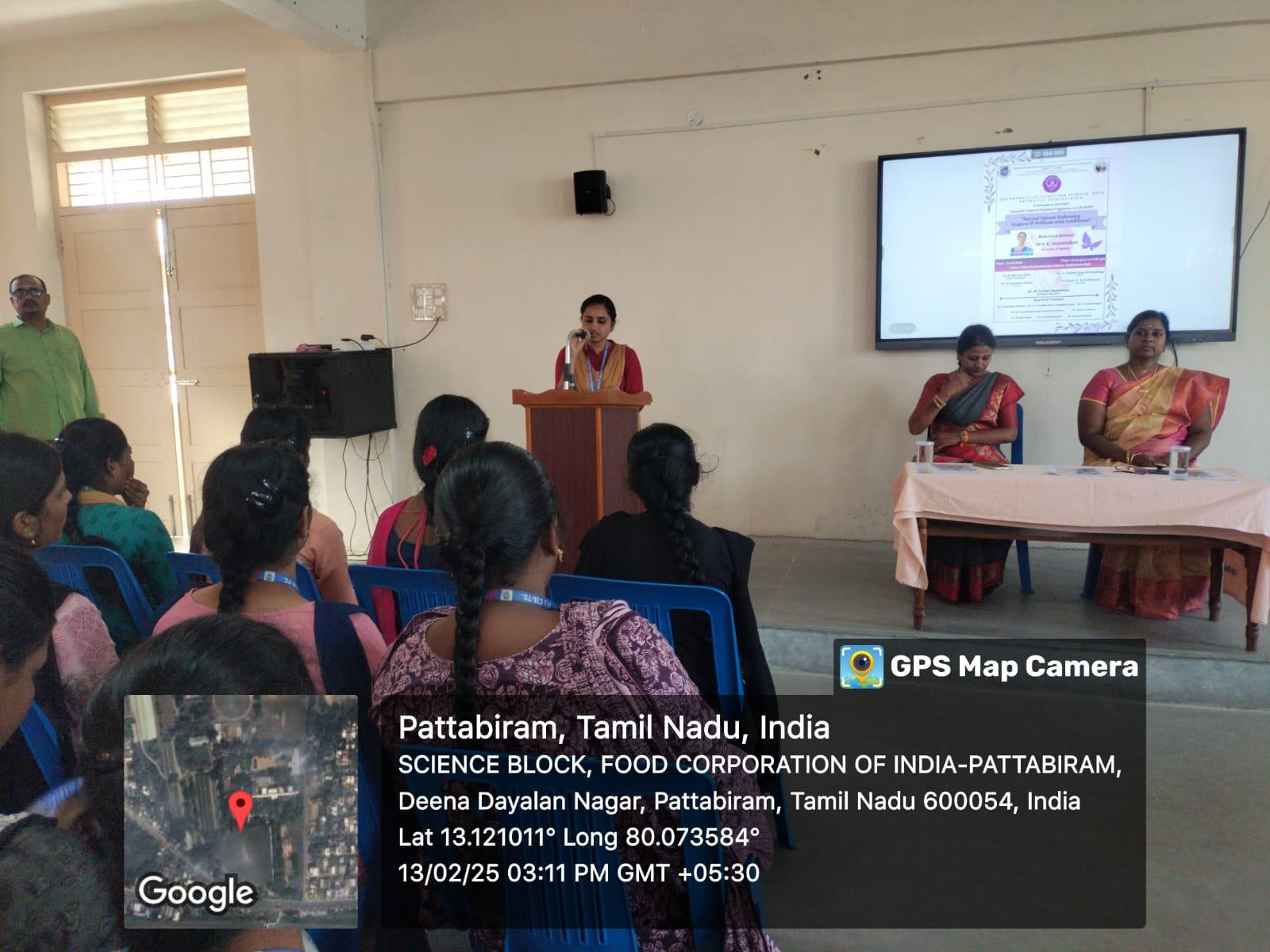
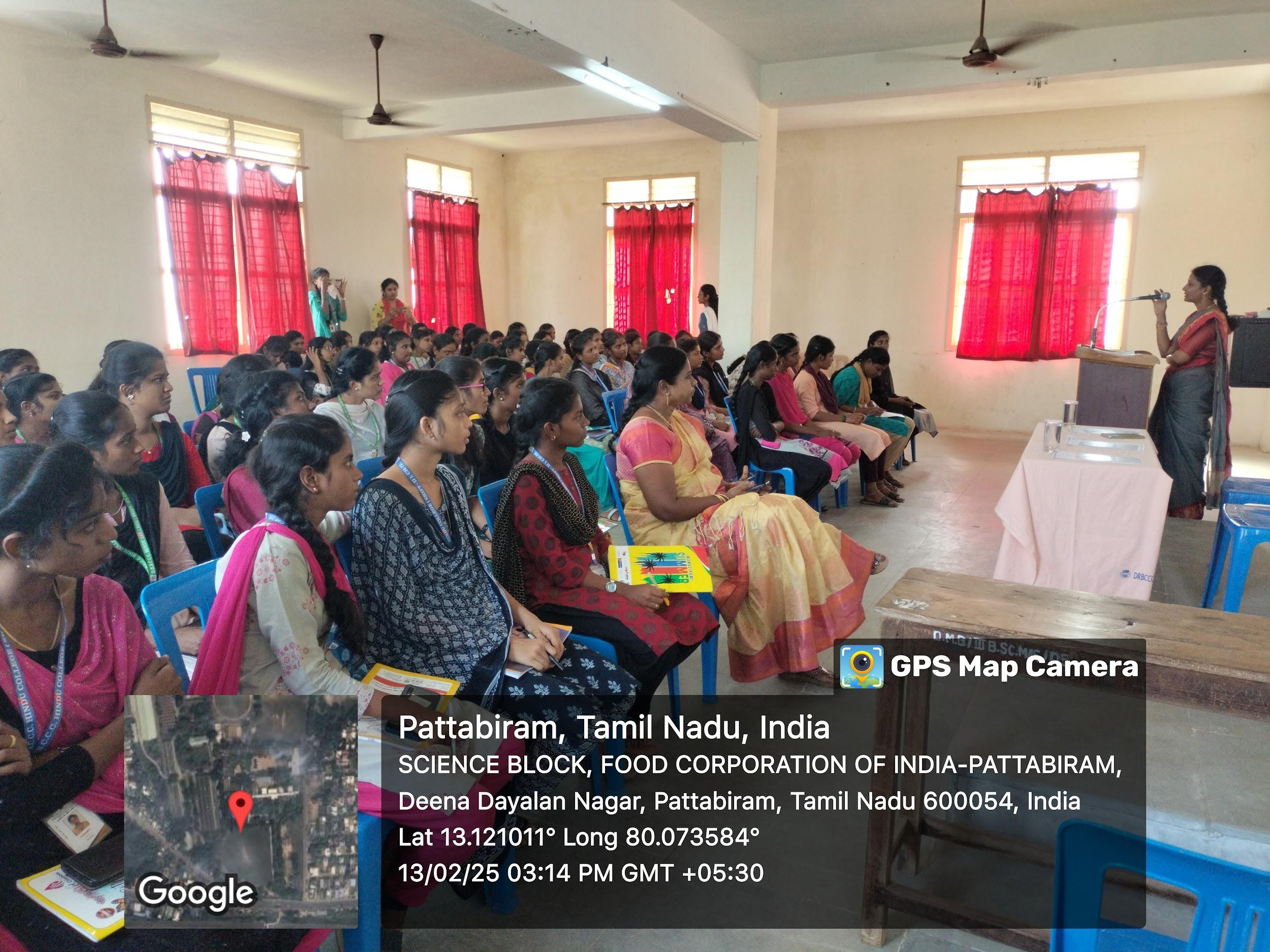
TThe AI and Data Science departments successfully conducted a life skills seminar titled "Beyond Taboos:
Embracing Hygiene & Wellness with Confidence." The program aimed to educate and empower female
students by providing essential knowledge on personal health, hygiene, and wellness while breaking
societal stigmas surrounding these topics on 13/02/2025.
Program Highlights
The session commenced with an opening address by Mrs.Gajalakshmi, Founder of Mahila emphasizing the
importance of life skills education in personal well-being. The event featured:
1 : Informative Sessions: Expert talks on hygiene management, self-care routines, and wellness tips.
2 : Interactive Discussions: Students were encouraged to share their concerns and ask questions in a
supportive environment.
3 : Myth-Busting Activity: A session debunking common misconceptions related to hygiene and wellness..
Key Takeaways
●Understanding the importance of proper hygiene management.
●Awareness of health issues and their preventive measures.
●Breaking the stigma associated with health-related discussions
●Boosting self-confidence and self-care practices.
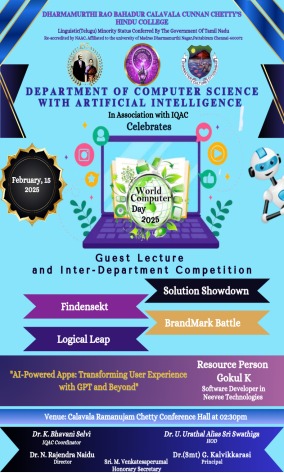
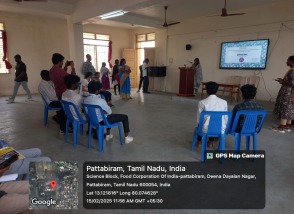
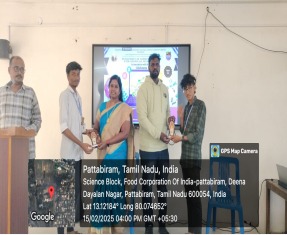
The Department of Computer Science with Artificial Intelligence, in association with the IQAC,
successfully organized World Computer Day by engaging students in technical and creative competitions
and followed by a Guest Lecture on February 15, 2025.
The event was aimed at enhancing students' knowledge and skills in AI, problem-solving, branding, and
logical reasoning. To provide insights into AI-powered applications and GPT-based innovations through a
guest lecture. To encourage inter-departmental participation and foster a spirit of innovation and
collaboration.
Event Highlights :
The event featured the following key components:
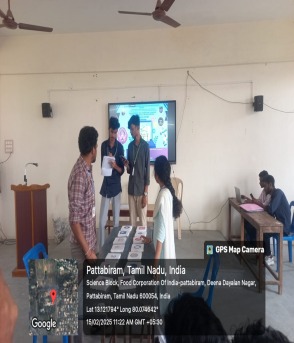
A. Interdepartmental Competitions
Four competitions were conducted to challenge students’ technical and analytical abilities:
1 : Findensekt – A tech-based scavenger hunt.
2 : Solution Showdown – A problem-solving and innovation challenge.
3 : BrandMark Battle – A marketing and branding competition.
4 : Logical Leap – A logic and reasoning challenge.
Participants showcased their skills in AI applications, critical thinking, and creativity, competing for
top honors.
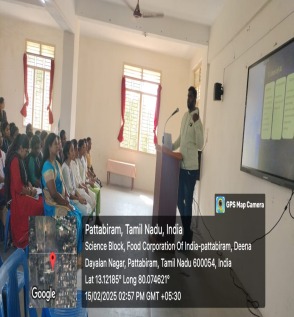
B. Guest Lecture
A distinguished guest speaker, Mr. Gokul K (Software Developer, NeeVee Technologies), delivered a
session on:
"AI-Powered Apps: Transforming User Experience with GPT and Beyond"
1: The session explored the impact of Generative AI on user experience.
2 : Real-world applications of GPT-powered AI solutions were demonstrated.
3 : Students actively engaged in the Q&A session, gaining valuable insights into emerging AI trends.
The seminar titled “Unlocking Logic Programming: An Introduction to Prolog” was organized by the
Department of Artificial Intelligence at DRBCCC Hindu College. The session aimed to provide insights
into the emerging field of Artificial Intelligence with Prolog, shedding light on the innovations,
challenges, and potential applications in various industries.
Key highlights from the session included:
1.An overview of Prologs, including Backtracking, Knowledge representation, and Declarative nature.
2.Practical demonstrations of how Prolog is being utilized in various sectors.
3.A discussion on Prolog and how it integrates AI with real world data.
4.Future prospects of Prolog and the career opportunities available for students in these growing
fields.
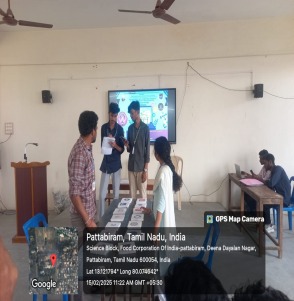
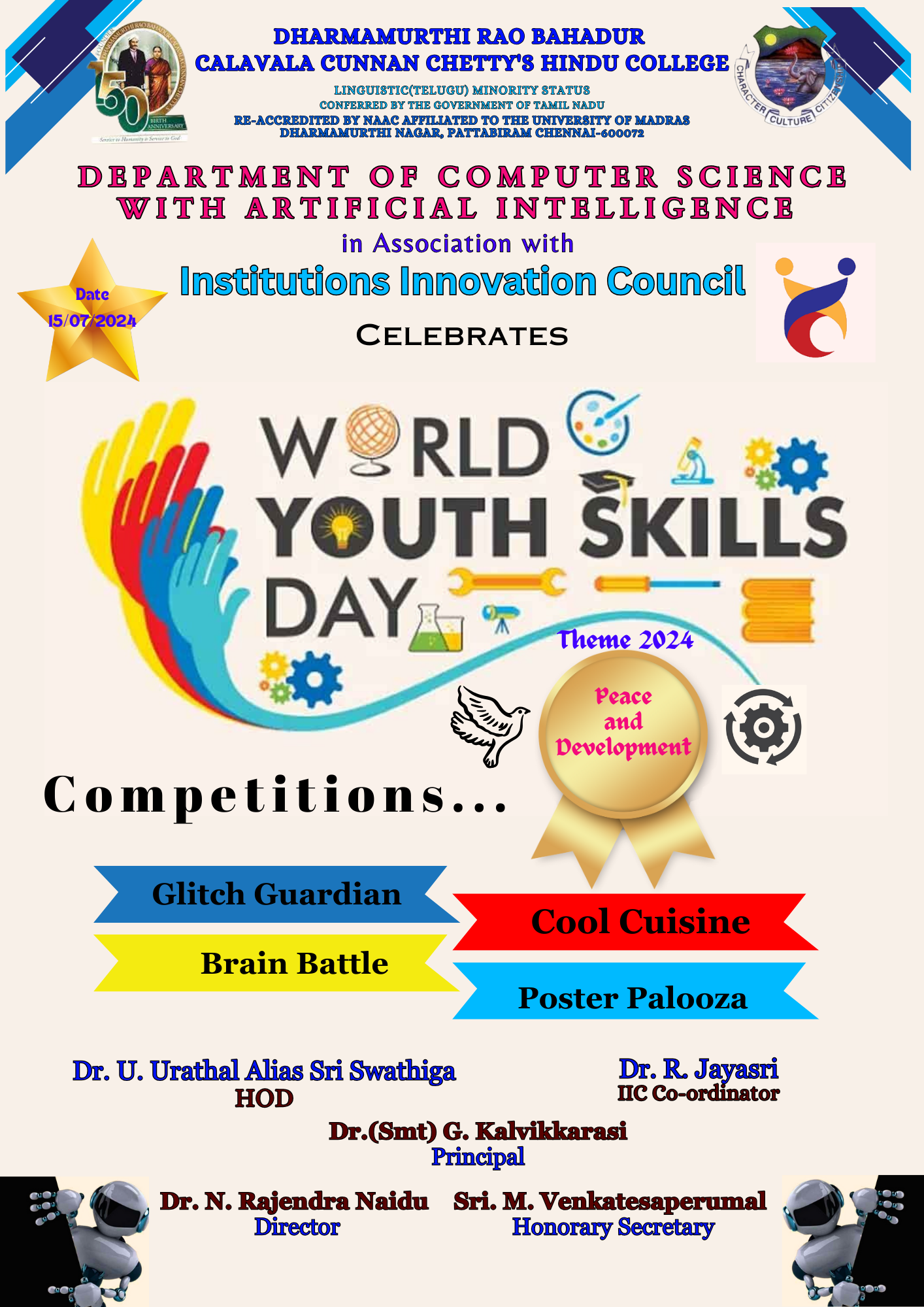
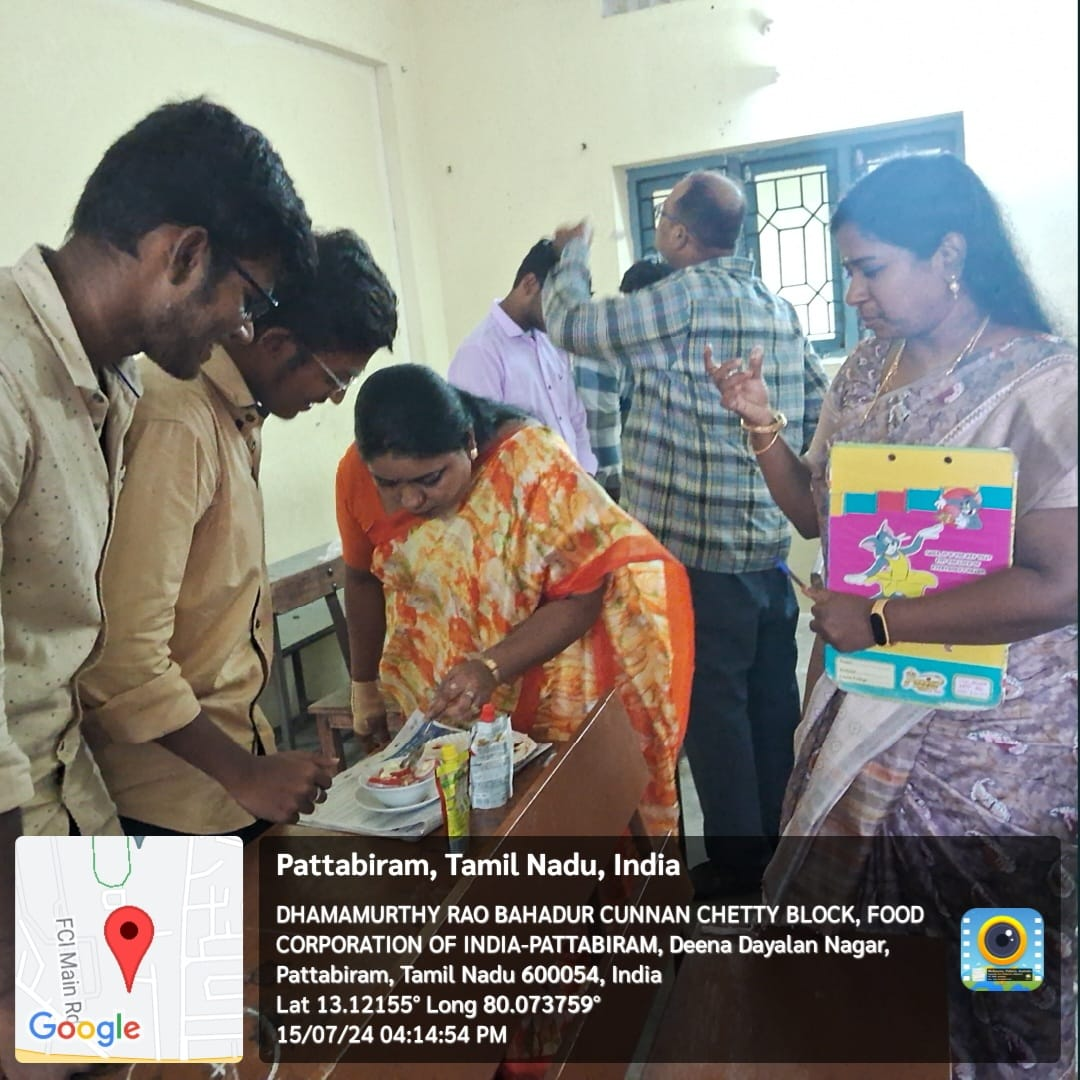
The Department of Computer Science with Artificial Intelligence, in association with the Institution's
Innovation Council (IIC), celebrated World Youth Skills Day on July 15, 2024.
This event was designed to foster skill development, creativity, and innovation among students through a
series of competitions. The activities included a quiz competition, a debugging contest, and a poster
design competition.
competitions for the event include:
1. **Brain Battle:** To test students' knowledge on a variety of subjects related to skills development.
2. **Glitch Guardian:** Where students can showcase their problem-solving abilities by identifying and
correcting errors in computer programs.
3. **Poster Palooza:** To encourage artistic expression and communication of ideas related to skills
development.
4. **Cool Cuisine:** Promoting culinary skills through creative dishes that do not require conventional
cooking methods.
The primary objective of this event was to shed light on the increasing prevalence of modern diseases and
explore how ancient yoga and nature cure methods can serve as effective remedies. The program aimed to
promote awareness about holistic health practices that have been a part of India's traditional knowledge
systems and to encourage participants to integrate these practices into their daily lives for better
health and well-being.
A certified yoga instructor conducted a demonstration and workshop, showcasing various yoga asanas
(postures) and pranayama (breathing techniques) known for their therapeutic benefits. Participants were
encouraged to practice these techniques to enhance physical and mental well-being.
A presentation was given on the principles of nature cure, emphasizing the use of natural elements
such as diet, water, air, sunlight, and herbs in healing and maintaining health. The speaker elaborated
on how these methods can complement conventional treatments and offer sustainable solutions for common
ailments.
The event included an interactive session where participants could ask questions and share their
experiences. This segment provided a platform for discussion and knowledge exchange on the practical
applications of yoga and nature cure in daily life.
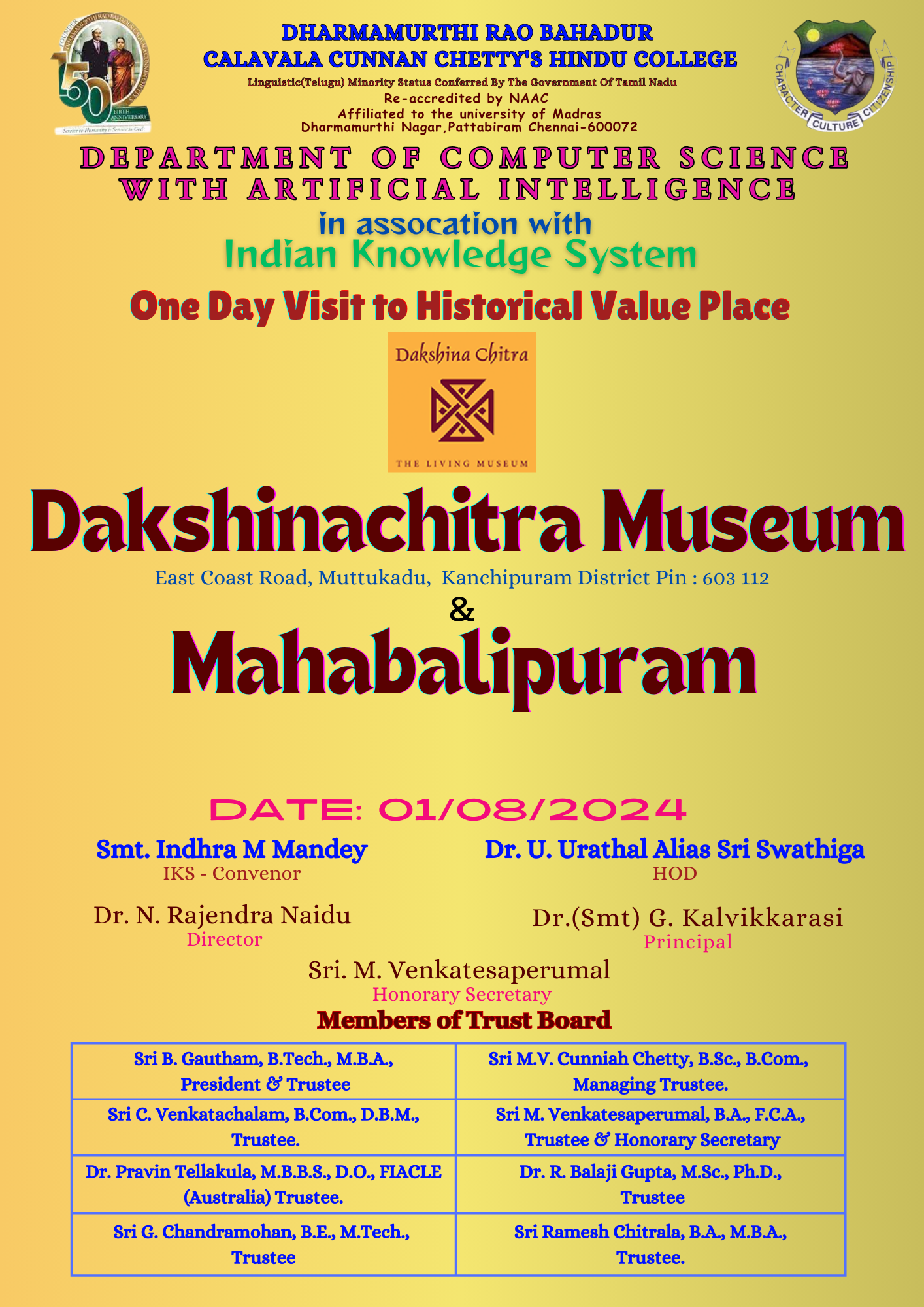
The B.Sc Computer Science with Artificial Intelligence Department organized a one-day visit to
DakshinaChitra Museum and Mahabalipuram on 01st August 2024. The excursion aimed to provide students
with an immersive experience in South Indian culture and heritage, enhancing their historical knowledge
and appreciation for ancient art and architecture
DakshinaChitra Museum:
- Cultural Exhibits: Students were exposed to the diverse architectural styles of South Indian houses,
traditional crafts, and folk performances.
- Interactive Sessions: Craft demonstrations and interactive sessions with artisans provided students
with a hands-on understanding of traditional skills and techniques.
Mahabalipuram:
- Historical Monuments: The visit to Mahabalipuram allowed students to witness the grandeur of ancient
Pallava architecture, including the intricately carved rock-cut temples and sculptures.
- Guided Tours: Knowledgeable guides provided in-depth historical context and interesting anecdotes
about the significance of each monument, enhancing the learning experience.
Department Activities: 2023-2024
The Department of Artificial Intelligence at DRBCCC Hindu College hosted a national webinar titled "Cognizance of
the Power of ChatGPT and Generative AI" on 30-08-2023 at Calavala Ramanujam Chetty Conference Hall.
Speaker: The webinar featured a diverse speaker, Er. Ramkumar Ramasubramanian Iyer, Senior Software Engineer,
Contiem. He is a renowned expert in the field of artificial intelligence.
Agenda: The event began with warm welcome and an introduction to the objectives and expectations of the webinar
by Dr.U. Urathal Alias Sri Swathiga, Head of the Department of Artificial Intelligence. The organizers
emphasized the importance of understanding and harnessing the potential of ChatGPT. The Chief Guest Introduction
done by Dr. A.Parimala, Assistant Professor, Department of Statistics. A Special Address given by Dr. N.
Rajendra Naidu, Director from DRBCCC Hindu College.
Paricipants: The webinar was attended by over 250 online participants from various colleges all over India and
96 students from the Department of Data Science and Artificial Intelligence.
Conclusion: It facilitated meaningful discussions on the capabilities and ethical implications of AI, with a
particular focus on ChatGPT. Dr. D. Lakshminarayanan, Head, Department of Data Science, would like to express
their gratitude to all the speakers, participants, and sponsors who made this webinar possible. Special thanks
to the Department of Artificial Intelligence at DRBCCC Hindu College for their dedication to advancing AI
education and research.
On September 20, 2023, a group of 46 students from the department of Artificial Intelligence went on an
education tour of the Connemara Public Library and the Government Museum, Egmore. The tour was organized by
the department of Artificial Intelligence and was led by two teachers Dr. U. Urathal Alias Sri Swathiga and
Prof. S. Sahayajothi. The purpose of the tour was to expose students to the rich cultural heritage of
Chennai and to help them learn more about the history and culture of India.
On July 19, 2023, first-year AI students attended a Basics of Python quiz through Quizizz. The quiz was
designed to assess their understanding of the fundamentals of Python programming, including data types,
variables, functions, control flow, and object-oriented programming.
Quizizz is a gamified learning platform that allows teachers to create and deliver interactive quizzes to
students. Quizzes can be taken on any device with an internet connection, and students can compete against
each other in real time.
Students were given 30 minutes to complete the quiz. They were allowed to use their textbooks, notes, and
other resources, but they were not allowed to collaborate with each other.
After the quiz was completed, Quizizz automatically graded the results and generated a leaderboard. Students
were able to see their scores and review their answers immediately.
The quiz was a valuable learning experience for the students. It helped them to assess their understanding
of the material and to identify any areas where they needed additional review. The quiz also provided the
teacher with feedback on how well the students were learning the material.

|
S.NO
|
Name of Add on Certificate programs offered
|
Duration of course
Online
|
Number of students enrolled in the year
|
Number of Students completing the course in the year
|
|
1
|
Masterclass in Java Programming
Pantech Learning
|
21days
|
38
|
5
|
|
2
|
JavaScript Essential Training
|
5hrs 40 minutes
|
1
|
1
|
|
3
|
Python Essential Training
|
4hrs 22 minutes
|
1
|
1
|
|
4
|
Learning Python
|
3hrs 5 minutes
|
1
|
1
|
|
5
|
Learning Java 11
|
2hrs 43 minutes
|
1
|
1
|
|
6
|
HTML Essential Training
|
2hrs 45 minutes
|
1
|
1
|
|
7
|
ISO 27001:2013- Cyber Security
|
1hr 29 minutes
|
1
|
1
|
|
8
|
Cert Prep: Microsoft Security Operations Analyst Associate
|
1hr 31 minutes
|
1
|
1
|
|
9
|
Information Security Governance
|
1hr 48 minutes
|
1
|
1
|
|
10
|
Learning Canvas
|
1hr 54 minutes
|
1
|
1
|
|
11
|
Customer insights and Consumer Analytics for organizations
|
1hr 9 minutes
|
2
|
2
|
|
12
|
SSL Certificates for Web Developers
|
1hr 25 minutes
|
1
|
1
|
|
13
|
HTML and CSS: Linking
|
1hr 44 minutes
|
1
|
1
|
|
14
|
2D Game Design and Development
|
1hr 9 minutes
|
1
|
1
|
|
15
|
Cybersecurity Awareness: Cybersecurity Terminology
|
44 minutes
|
1
|
1
|
|
16
|
Oracle Java Cerification: 1 Data Types
|
34 minutes
|
4
|
4
|
|
17
|
Oracle Java Certification: 2 Operators and Decision Statements
|
32 minutes
|
3
|
3
|
|
18
|
Oracle Java Certification: 3 Methods and Inheritance
|
35 minutes
|
1
|
1
|
|
19
|
Great Learning: Introduction to Artificial Intelligence
|
|
1
|
1
|
|
20
|
Great Learning: Introduction to Deep Learning
|
|
1
|
1
|
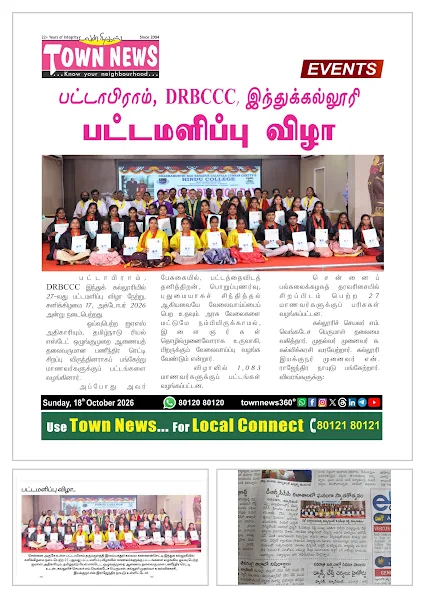 “Several leading regional news papers have captured the 27th Graduation Day ceremony held in our college on 17.10.2026 in their newspapers.”
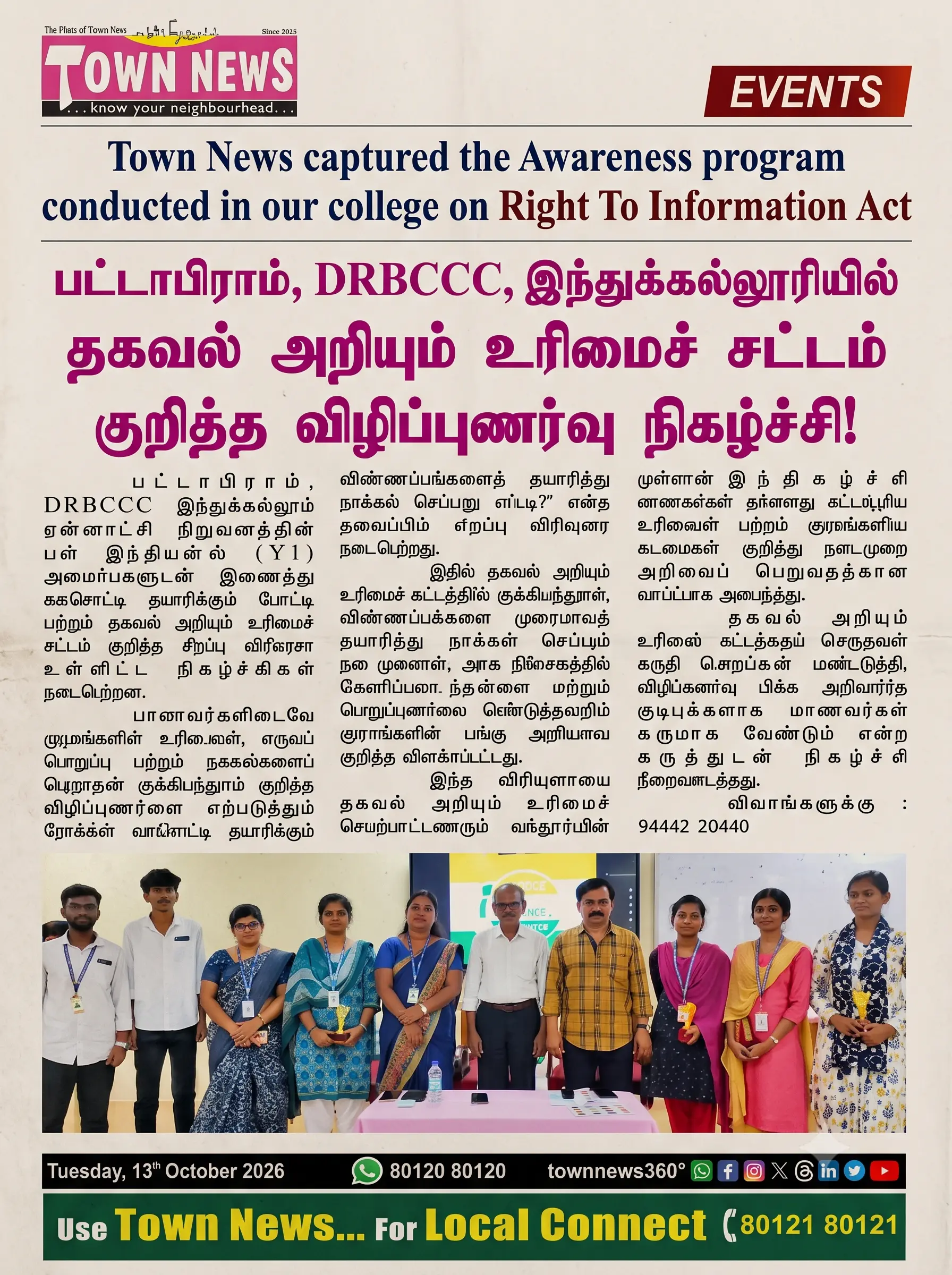 “Town News captured the Awareness program conducted in our college on Right To Information Act program.”
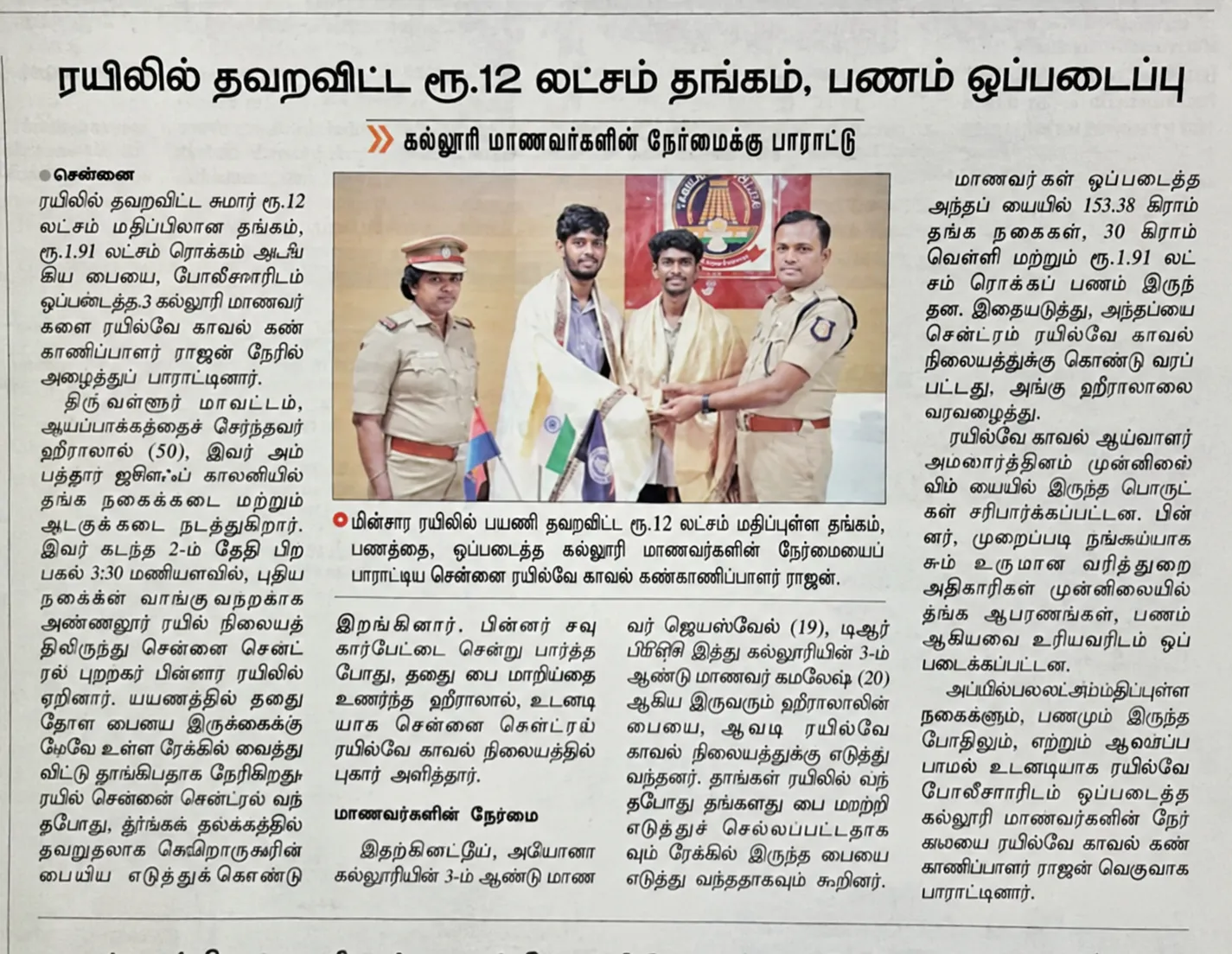 “டி.ஆர்.பி.சி.சி.சி. இந்துக் கல்லூரி மாணவர் கமலேஷ் – ரயிலில் தவறவிடப்பட்ட ₹12 லட்சம் மதிப்புள்ள தங்கம் மற்றும் பணத்தை நேர்மையுடன் காவல்துறையிடம் ஒப்படைத்தார்.”
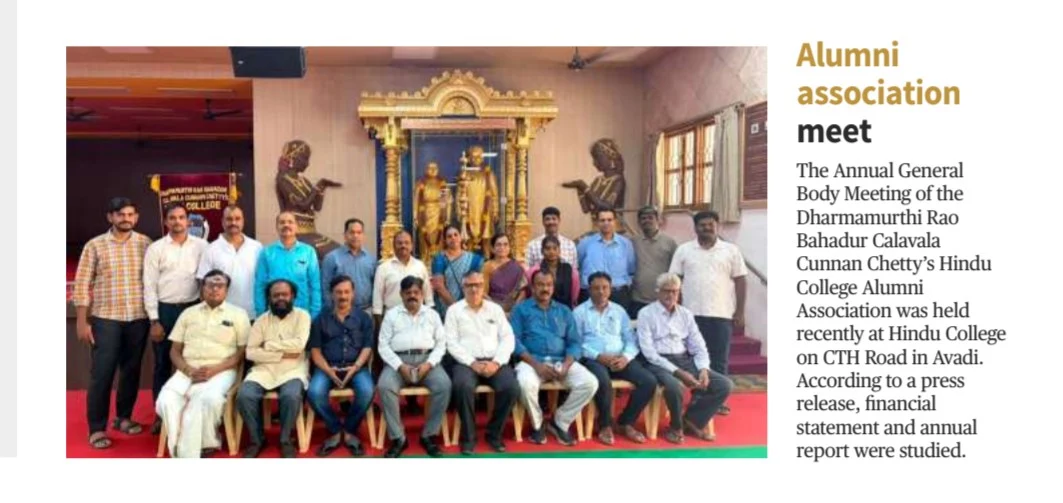 “Alumni Association Annual General Body Meeting conducted in DRBCCC Hindu College has been highlighted in The Hindu Down Town on 04.10.2026.”
 “DRBCCC Hindu College (Shift 2) proudly invites you all for 27th Graduation Day on 17.10.2026 at 10.30 a.m. Chief guest: Thiru K.Phanindra Reddy.”
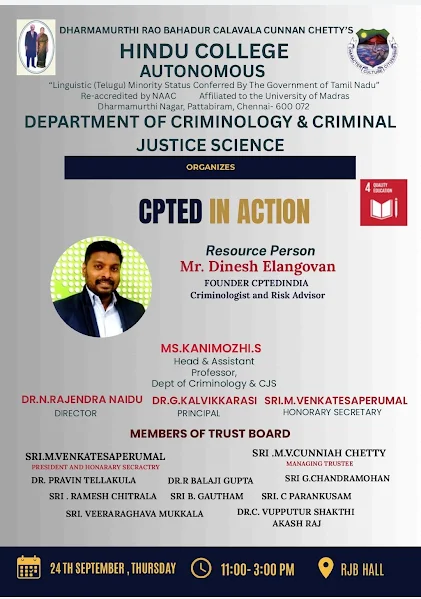 “The Department of Criminology and Criminal Justice Science is organizing a workshop titled " CPTED in Action" on 24th September 2026 at 11.00PM in the RJB hall.”
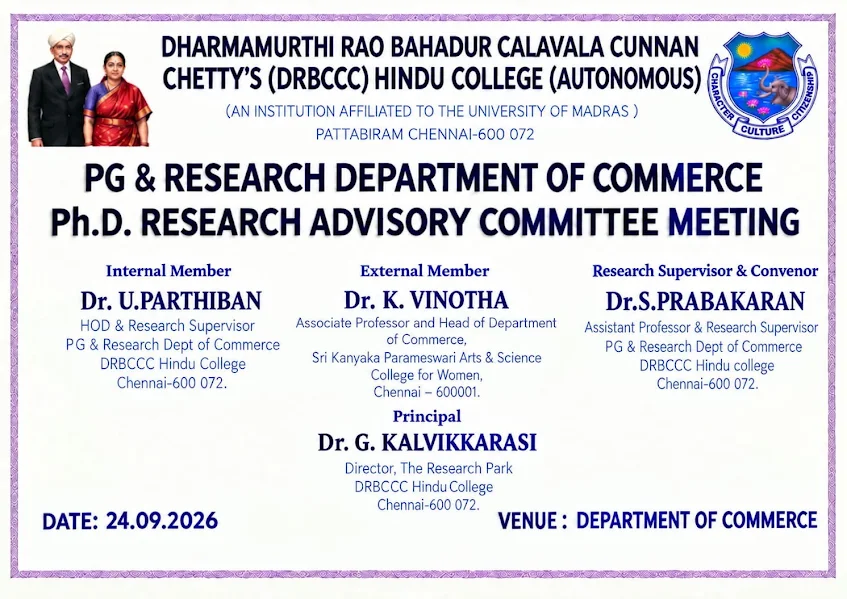
 “Ph.D Research Advisory Committee on 24.09.2026”
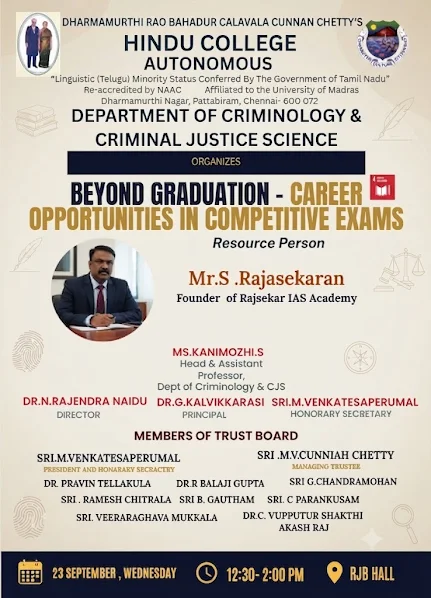
 “The Department of Criminology and Criminal Justice Science is organizing a career Orientation program on the title " Beyond Graduation - Career Opportunities in Competitive Exams" on 23rd September 2026 at 12.30PM in the RJB hall.”
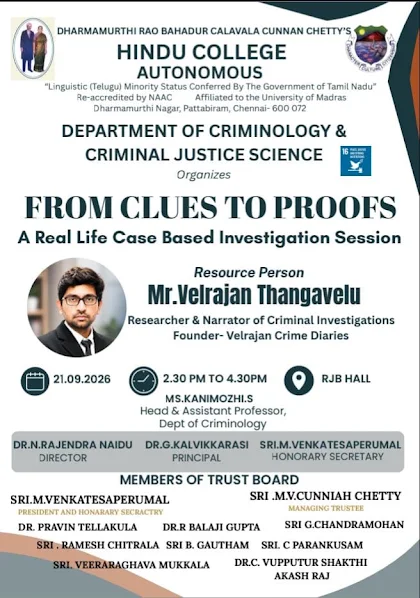 “The Department of Criminology and Criminal Justice Science is organizing a one day interactive session on the title "From Clues to Proofs - A real life case based investigation session" on 21st September 2026 at 2.30PM in the RJB hall.”
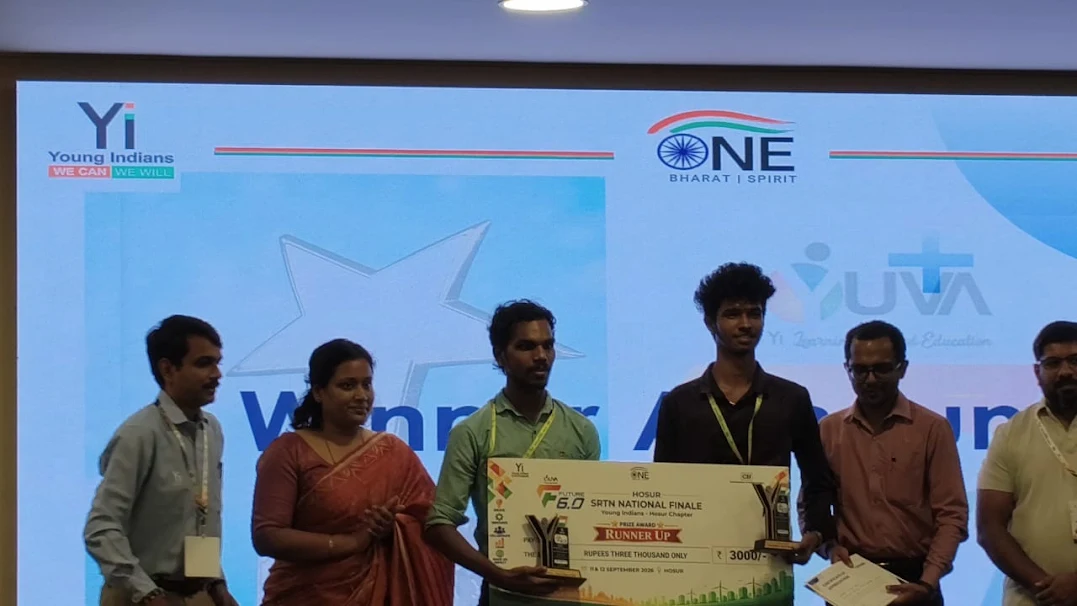 “Students from the Department of Computer Science with Artificial Intelligence participated in Future 6.0 - SRTN National Finale organised by Yi Yuva at Adhiyamaan College of Engineering, Hosur. The team secured second position and received a cash prize of ₹3000.”
 “College autonomous status celebration captured in leading newspaper.”
 “DRBCCC Hindu College organises an interactive session on "Effective Implementation Of Autonomy". Chief guest: Dr.Smt.S.Uma Gowrie, Principal and Secretary, Ethiraj College for Women.”
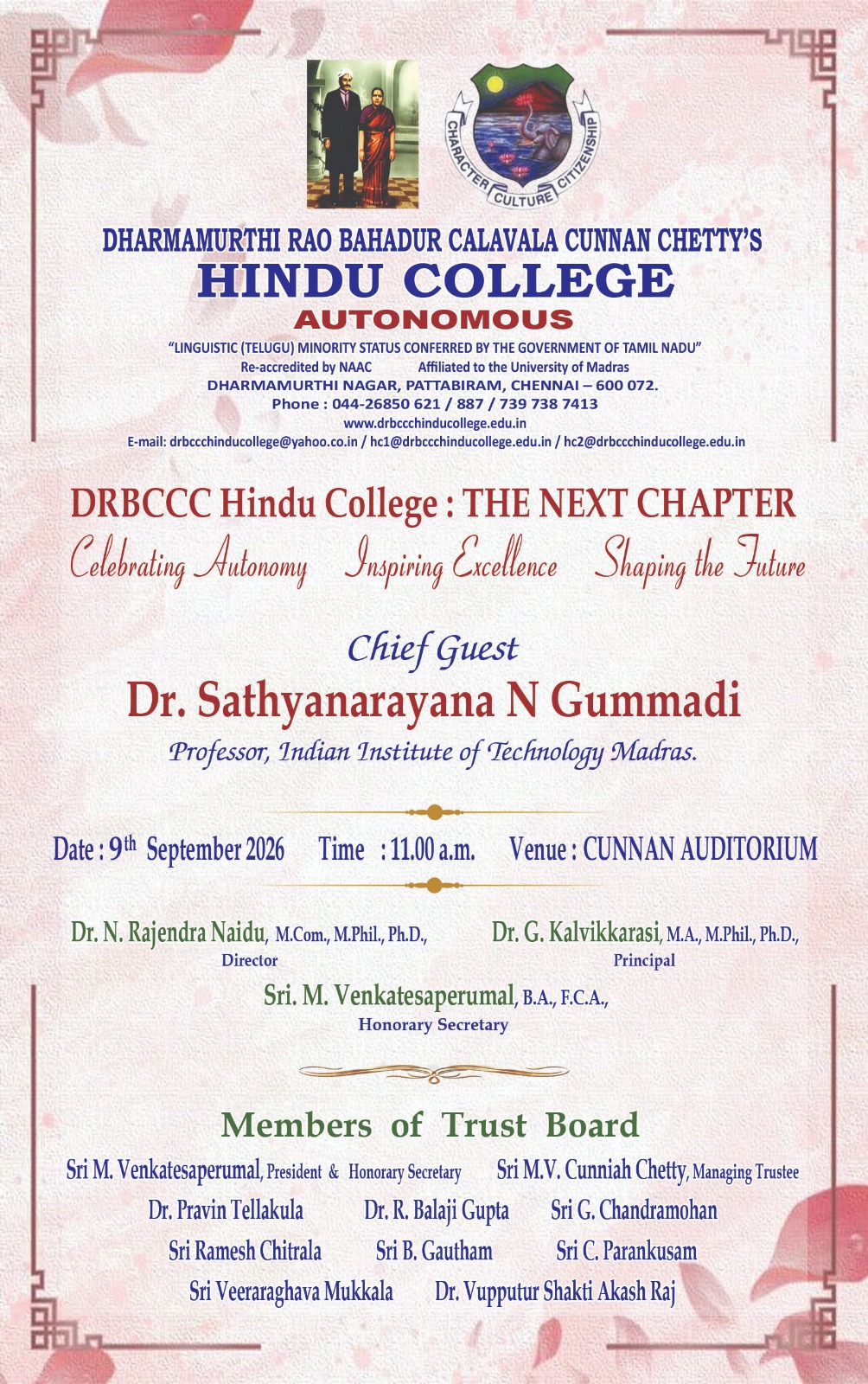 DRBCCC HINDU COLLEGE: The next chapter Celebrates Autonomy on 9/9/26. Chief guest: Dr.Sathyanarayana N Gummadi, Professor, IIT Madras.